You glance at the interest rate on your card statement the way you’d read a price tag on a shelf: printed, fixed, not something you ask about. Sometimes that’s true. But some card companies will lower it if you simply ask.
Still, picking up the phone can feel awkward. You might worry they’ll judge the balance, or that asking will somehow make things worse. A nervous stomach before this call is normal, and it’s no reflection on how you manage money.
Asking for a lower rate isn’t a confrontation. It’s a short, polite call with a script in front of you. This guide gives you the words, a quick prep list and a plan if they say no.
Why a Few Points Off Your Rate Is Worth One Call
Every month, interest gets added to what you owe before your payment does anything else. A lower rate means less gets added, so more of the same payment goes to the card.
Your statement calls the rate the APR, short for annual percentage rate. It’s simply the yearly interest rate on the card.
Asking your card company for a lower rate is a normal step. The FTC’s own debt advice suggests it (FTC).
Here’s a made up example, worked out with the credit card payoff calculator. Say you owe $3,000 at 25% and pay $150 a month.
In the first month, about $62.50 of interest gets added. The card takes 27 months to pay off and costs about $921 in interest.
Now say a quick call drops the rate to 20%. The first month’s interest falls to $50. With the same $150 a month, the card is gone in 25 months, and the interest comes to about $680.
That’s about $241 saved and two months sooner, from one phone call. You didn’t pay a cent more.
That doesn’t mean every call ends in a lower rate. It means the possible upside is real, and the cost of asking is ten minutes.
If you’d like to see your own numbers first, the credit card interest calculator shows what your card adds each month.
A small number off the rate keeps working every month after the call.
Gather 4 Things Before You Dial
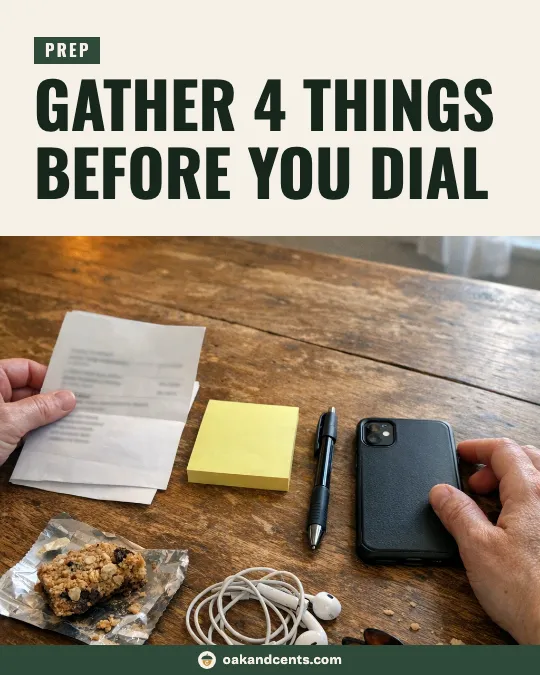
A few minutes of prep makes the call feel calmer. You won’t be hunting for a number while someone waits on the line.
You don’t need a spreadsheet or a speech. You need four things in front of you:
- Your latest statement or card app, open to the page that shows your interest rate and the customer service number.
- Your recent payment history. If you’ve paid on time for the last several months, note how many. It’s a fair thing to mention.
- Your plan. One sentence about how you’re paying the card down, like “I’m paying $150 a month and not adding new charges.”
- A pen and paper, to write down the name of the person you speak with, the date and anything they offer.
If you have several cards, start with the one that has the highest rate or the biggest balance. That’s where a lower rate usually saves the most.
Try this: Write your current rate at the top of a sticky note before you call. Leave a blank space next to it for the new one.
Prep doesn’t change the card company’s rules. It just helps you ask clearly, and that’s the part you control.
Ready to call means having what you need, not feeling fearless.
Pick a Calm Moment, Not a Rushed One
The best time to call is when you have 15 quiet minutes, not when you’re in the school pickup line.
Calls like this can involve a hold, a transfer or a few account questions. Being rushed makes it harder to listen and ask follow up questions.
Some people find a weekday morning easier, after the kids are out the door and before the day gets busy. Others call on a lunch break from the car. Pick what works in your week.
It can also help to call after a stretch of on time payments, since that’s the story you’ll be telling.
If you’re feeling anxious, that’s okay. You’re not asking for a favor you don’t deserve. You’re asking a normal question about your own account.
Keep a glass of water nearby and the script open on your phone or on paper. Read it word for word if that helps. Nobody will know.
Calm doesn’t mean you’re not nervous. It means you have the time to finish the call.
Use This Word for Word Script
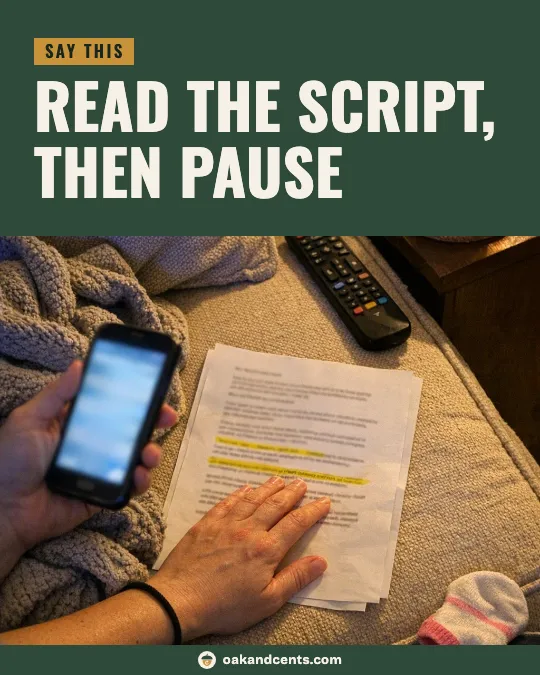
Short and polite works best. You’re stating a few true facts and asking one clear question.
Call the number on the back of your card or on your statement. When you reach a person, start here:
Say this: “Hi, I’m calling about my interest rate. I’ve had this card for [number] years and I’ve paid on time for the last [number] months. I’m working on paying the balance down, and my rate is [your rate]. Is there any way you can lower it?”
Then stop talking and let them answer. The pause can feel long. That’s okay.
If the person says they can’t change rates, ask kindly if there’s someone else who can review it.
If they say yes, ask two more questions before you hang up:
Say this: “Thank you. Is the new rate permanent, or is it for a set number of months? And when will I see it on my statement?”
Write down the new rate, how long it lasts, the date and the name of the person who helped you.
You don’t need to argue, threaten to leave or tell a long story. Honest and brief is enough.
Clear and kind beats clever every time.
If They Say No, Ask These Follow Up Questions
A no on the first try can happen, and it doesn’t mean the call was wasted. You can still learn something useful.
Here’s how to keep the conversation going, politely:
| If they say | You can say |
|---|---|
| “We can’t lower your rate.” | “I understand. Is there anything that might change that in a few months?” |
| “Your rate is already competitive.” | “Thanks. Is there any promotion or program on my account right now?” |
| “You’d need to apply for a new card.” | “How does that work, and is there a credit check or a fee?” |
| “We can’t change anything today.” | “Could you note my request on the account? I’ll check back later.” |
Then thank them and end the call on good terms.
That doesn’t mean giving up. Put a reminder on your calendar to call again in about three months, after a few more on time payments.
In the meantime, your plan keeps working without a lower rate. A steady payment above the minimum is still the biggest lever you have. The minimum payment trap guide shows how to set one.
A no today is information, not a closed door.
Ask About a Payment Program if Money Is Tight
If your budget is already stretched, the call can do more than ask about the rate.
Many card companies are willing to work with you on your payment if you’re facing a money emergency, like a job loss or a medical bill (CFPB).
Some creditors may agree to reduce your interest rate, waive certain fees or change your due date to match your payday (CFPB).
The CFPB suggests explaining four things clearly: why you can’t pay the minimum, how much you can pay, when you could restart normal payments, and what new payment you’re asking for and for how long.
Say this: “I’ve had a drop in income and I’m having trouble with my minimum payment. I can pay [amount] a month for the next [number] months. Do you have a hardship or payment program that could help?”
Ask how any program works before you agree: what the rate and payment will be, how long it lasts, and if anything changes on your account.
The CFPB’s advice is to act right away, so calling before you miss a payment is the safer move.
Asking for help on the phone takes courage. It’s also one of the most practical things you can do.
Send Every Dollar You Save Back to the Card
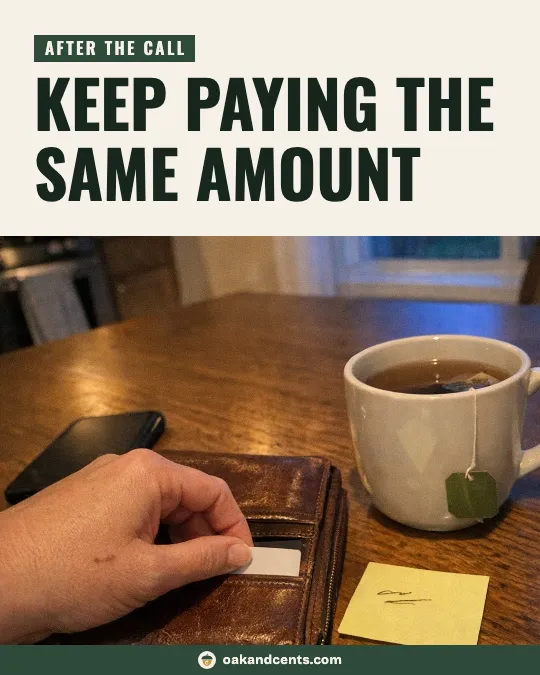
Say the call worked and your rate went down. The next step is the one that makes the savings count.
Keep paying the same amount you paid before.
When the rate drops, it’s tempting to lower your payment too, because the new minimum may be smaller. But if you do, the savings quietly turn into a longer timeline instead of a faster one.
Remember the made up $3,000 card. At 20% with the same $150 a month, it’s gone in 25 months instead of 27. That only happens if the $150 stays $150.
If you have more than one card, the same idea works across all of them. Pay every minimum, then send your extra to one card at a time. Which debt to pay off first helps you choose the order.
Your plan in one line: ask for a lower rate + keep the same payment + no new charges on the card.
Then check your next statement to confirm the new rate shows up as promised. If it doesn’t, call back with the notes you took.
A lower rate is a gift to your future self, as long as you don’t spend it.
When a Phone Call Isn’t Enough
Asking for a lower rate fits well when you’re paying at least the minimum on time and want each payment to go further.
It’s a small step, though, not a whole plan. Think twice about relying on it alone if your balances keep growing, or if you’re using a card to cover groceries or rent.
Other strategies might help more in that case. A 0% balance transfer, a consolidation loan or a different payoff order each have trade offs. How to pay off credit card debt compares 9 of them side by side.
If the minimums don’t fit your budget at all, a nonprofit credit counselor can look at the whole picture with you. They can also explain if a debt management plan makes sense.
To find one, look for a nonprofit agency through the National Foundation for Credit Counseling.
You don’t need to pay a company to make this call for you. The FTC points out that you can talk to your card company yourself, for free (FTC). Use the number on your own card.
Knowing when you need more than a phone call is part of the plan, too.
Make the Call This Week
That rate on your statement only looked as fixed as a price tag. This week, you get to ask about it.
This week, pick a calm 15 minutes. Have your statement, your payment history and your sticky note ready. Then read the script and pause.
Whatever the answer, write it down next to your card on the free worksheet on this page. Then check what your steady payment does in the credit card payoff calculator.
The rate might not move this time. Asking still moves you forward.