Say you spend $80 on a Sunday shop, then $15 and $12 on quick stops during the week. That’s $107 a week, or about $464 a month, all for one person.
Grocery tips tend to picture a family of four and recipes that serve six. Meanwhile, a quiet voice says that since it’s just you, the number should be tiny. Feeling stuck between the two is normal.
A realistic grocery budget for one isn’t the smallest number online. It’s your own receipts, compared with the USDA’s numbers for one person and tested for a month. Four steps get you there.
Step 1: Decide What Counts as Groceries
Before you add anything up, decide what goes in the grocery column. It sounds fussy, but it changes the number more than you’d think.
Living alone blurs the lines. A rotisserie chicken, a deli salad for lunch, a latte from the café inside the store. Toilet paper and dish soap often ride along in the same cart, too.
Here’s a simple rule that works for many people: if you bring it home to eat, it’s groceries. If you eat it out, or it isn’t food, it gets its own line.
- Groceries: food and drinks you cook or eat at home, rotisserie chicken included
- Eating out: takeout, delivery, the work lunch and coffee bought on the way
- Household: toilet paper, cleaning spray and shampoo, even when they’re on the grocery receipt
That doesn’t mean takeout is off limits. It just means it doesn’t hide inside the food number.
A clean food line also makes step 3 fair, because the USDA numbers you’ll compare with cover food and drinks only.
The Monthly Budget printable you can grab from this page keeps groceries, eating out and household on separate lines already.
A food number with nothing else mixed in is the only kind worth comparing.
Step 2: Add Up Four Weeks of Real Receipts
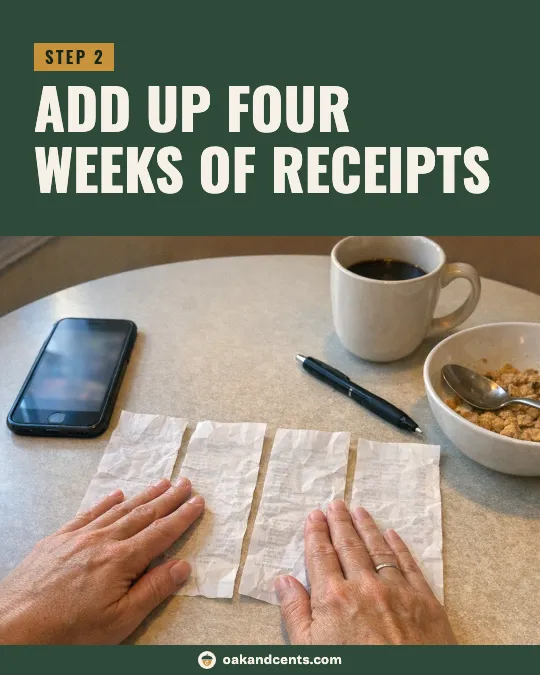
Your real number is already written down. It’s in your banking app, your card statements and the receipts balled up in your coat pocket.
Go back four weeks and add up every food charge, small ones included. The gas station milk, the pharmacy snack run and the corner store all count.
Four weeks matter because a single week can fool you. One week you restock olive oil, coffee and spices. The next you live on leftovers and spend $30.
Here’s a made up example for one person. Four weeks of food came to $92, $78, $110 and $84. That’s $364 in total, or $91 a week.
A month is a little more than four weeks, so $91 a week works out to about $394 a month.
Don’t trim anything yet. Right now you’re only finding out what’s true, and what’s true isn’t a grade.
Try this: For the next week, snap a photo of every food receipt and keep them in one album on your phone. Next time, this step takes five minutes.
The amount you actually spend is the only honest place to start.
Step 3: Compare Your Number With the USDA Plans for One
Once you have your number, it helps to see what a reasonable range looks like. The USDA publishes one every month.
Its food plans put a price on a healthy diet made entirely at home, at four levels: Thrifty, Low-Cost, Moderate-Cost and Liberal. The latest monthly cost of food report has the figures.
One detail matters if you live alone. The USDA lists costs for people in a household of four, and suggests adding 20% for someone in a one person household.
Here are the August 2026 monthly figures for women, with that 20% already added:
| USDA plan, August 2026 | Woman 20 to 50, living alone | Woman 51 to 70, living alone |
|---|---|---|
| Thrifty | about $304 | about $284 |
| Low-Cost | about $331 | about $322 |
| Moderate-Cost | about $403 | about $397 |
| Liberal | about $515 | about $479 |
Figures for men, along with weekly costs, are on the same USDA page.
Our made up $394 sits between the Low-Cost and Moderate-Cost levels for a woman 20 to 50. That’s a reasonable place to be, not a problem to fix.
Keep two limits in mind. These are national averages, so food where you live may cost more or less. They also assume every meal and snack is made at home.
That doesn’t make the Thrifty number your target. It’s a yardstick to measure against, not a rule.
If your number lands somewhere in this range, you’re likely closer to realistic than you feared.
Step 4: Pick a Weekly Amount and Try It for a Month
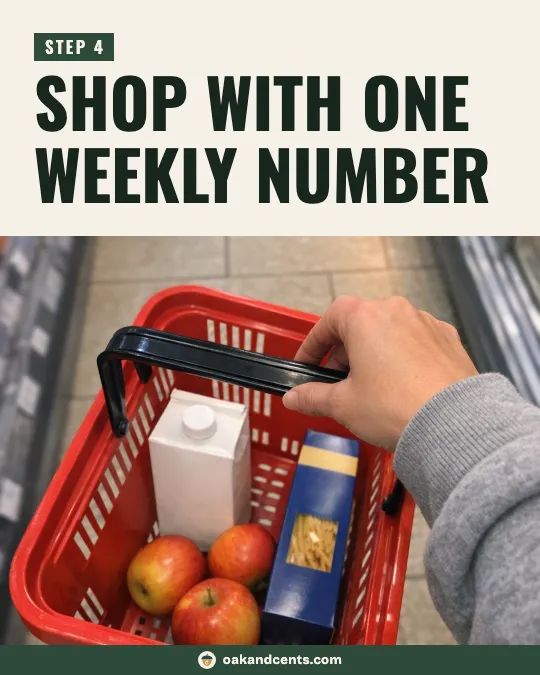
Now turn what you’ve learned into one number to shop with. For a single shopper, a weekly amount usually works better than a monthly one.
Here’s why. Some months have four Saturdays and some have five. A monthly number has a way of running out right before that fifth weekend.
If your four weeks came out a little high for you, take off $5 or $10, not $50. In our example, $91 a week becomes $85.
That’s about $26 a month less, and about $368 a month in total, without changing much about how you eat.
If you’re paid every two weeks, set aside $170 from each paycheck for food. If you already budget by paycheck, it’s one more line under the bills.
Give the money a home you can see at a glance. A separate debit card used only for food works. So does a labeled envelope of cash, if cash stuffing suits you.
When the week’s amount runs low on Thursday, the pantry gets its turn before the store does.
A weekly number you can hold beats a monthly one that’s gone by the 24th.
Shopping for One Costs More Per Bite, So Plan for It
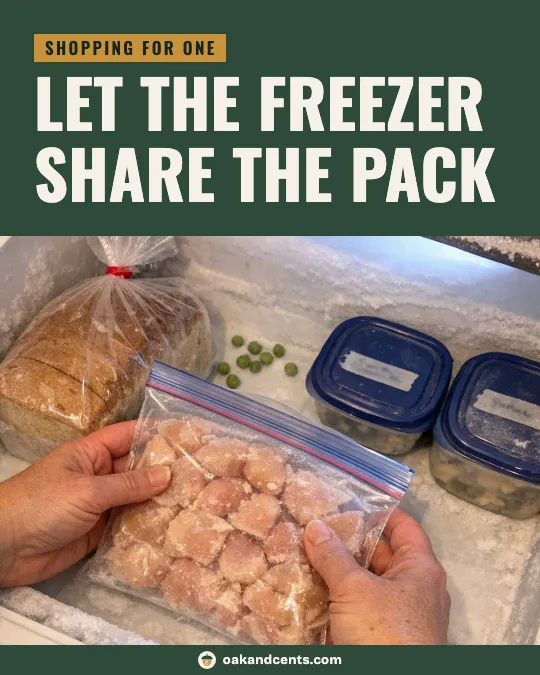
Standing in front of a family pack of chicken that could feed you for a month is its own special kind of frustration.
Shopping alone has costs that family budget tips rarely mention. Small packages often cost more per ounce. Big ones cost less per ounce but can spoil before you finish them. And most recipes assume four servings.
That isn’t poor planning on your part. It’s simply how stores and recipes are set up.
A few fixes that are made for one:
- Treat the freezer like a roommate. Split a family pack into single portions the day you buy it. Bread and cooked rice usually freeze well, too.
- Buy produce by the piece. One pepper, two bananas and a single onion, instead of the bag.
- Cook a plain base. A pot of rice or a tray of roasted vegetables can turn into three different meals.
- Split a big pack with a friend. You get the lower price per ounce without the waste.
Say this: “I’m grabbing the big pack of chicken thighs this weekend. Want to split it? I’ll bag up your half and you can pay me back.”
For more ways to bring the total down, our guide to saving money on groceries has 15 small habits to pick from.
When the freezer does the sharing, less of your money ends up in the trash.
Look Back After Four Weeks Before You Change Anything
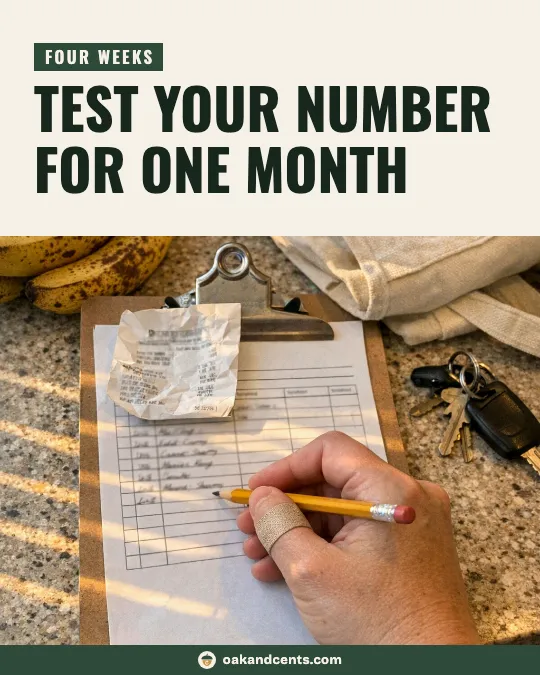
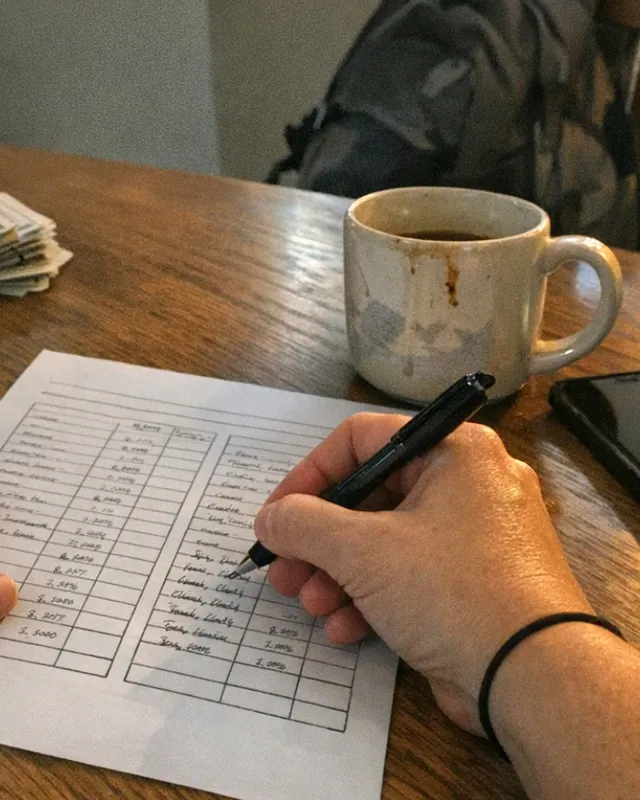
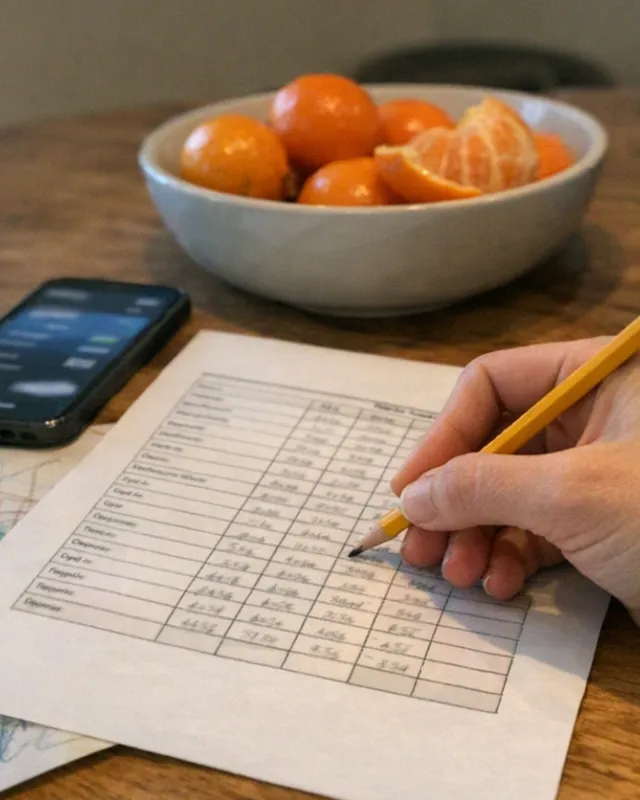
The test month only works if you write things down. The Expense Tracker printable from this page gives you a line for your budget at the top and 25 rows for the date, the store and the amount.
At the end of four weeks, sit down with it and look at three things:
- How many weeks landed close to your number?
- Which week went over, and what happened? A birthday dinner, a sick week or a pantry restock?
- Did any food get thrown away?
If three of the four weeks landed close, keep the number. One wobbly week is just life.
If every week went over, raise the number by $5 or $10 and test it again. Raising it is part of finding it, not a step backward.
If food got tossed, the fix may be in the freezer, not the budget.
Once the number holds for a month, anything left in the food envelope at the end of a week can go to a goal. That might be a savings cushion or an extra payment on a card.
One honest month tells you more than any number online.
Shopping for Two Changes the Math a Little
Maybe a partner or a grown child shares your kitchen. The same four steps still work. Only the USDA comparison shifts a little.
The USDA suggests adding up each person’s cost, then adding 10% for a two person household instead of 20%.
Take a woman and a man, both 20 to 50, with the August 2026 figures. Together they come to about $630 a month on the Thrifty plan and about $652 on the Low-Cost plan.
By those numbers, two people sharing a kitchen cost less than two people shopping alone.
Agree on what counts as groceries before you add anything up, so one person’s coffee runs don’t end up in the shared food number.
Two receipts, one number and one month to test it. Same plan, bigger cart.
If Your Realistic Number Is More Than You Have
Sometimes step 2 shows a number that’s already lean, and it still doesn’t fit the paycheck.
That’s a money problem, not a shopping problem. Food is a basic need, and there’s help for exactly this.
SNAP provides food benefits to people with low income to help with their grocery budget, the USDA explains. Local food pantries can also fill the gap between paydays.
If food keeps going on a credit card, a nonprofit credit counselor can go through your income and bills with you. Counselors at NFCC member agencies do this kind of work every day.
Getting help with food is a way of taking care of yourself, and it counts as part of the plan.
Start With This Week’s Receipt
That $107 week from the top of the page isn’t a mistake to fix. It’s a starting point, and yours is too.
Tonight, pull up four weeks of food charges in your banking app and add them up. Divide by four, and you have your real weekly number.
Then hold it up to the USDA range above and choose an amount for next week.
If you’re also paying down a card, the food money left at the end of a good week can go there. The free debt tracker shows those small extras adding up.
Your number, from your own receipts. That’s the realistic one.