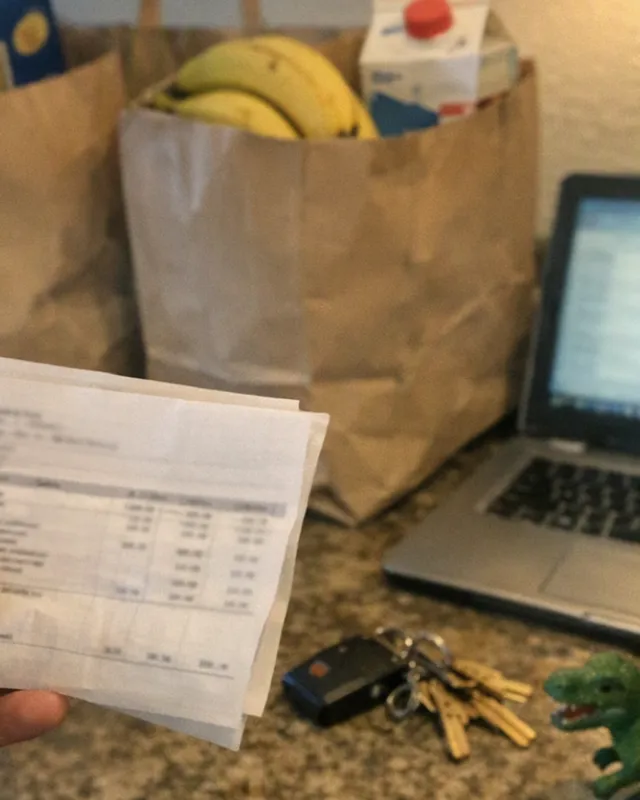
You check the bank app in the grocery store parking lot, then again at the pharmacy. Checking more often feels responsible, and it rarely shows you the limit until you’ve already passed it.
So the week turns into a guessing game: check the balance every few hours, or stop checking and hope it works out. That isn’t a discipline problem. A number on a screen just doesn’t feel like money in your hand.
Cash stuffing changes that. A few spending categories get their own cash on payday, and an empty envelope means that category is done until the next one. Pick a few envelopes and a number for each, and you’ll be ready to fill them on your next payday.
Cash Stuffing Is the Envelope System, Made Simple
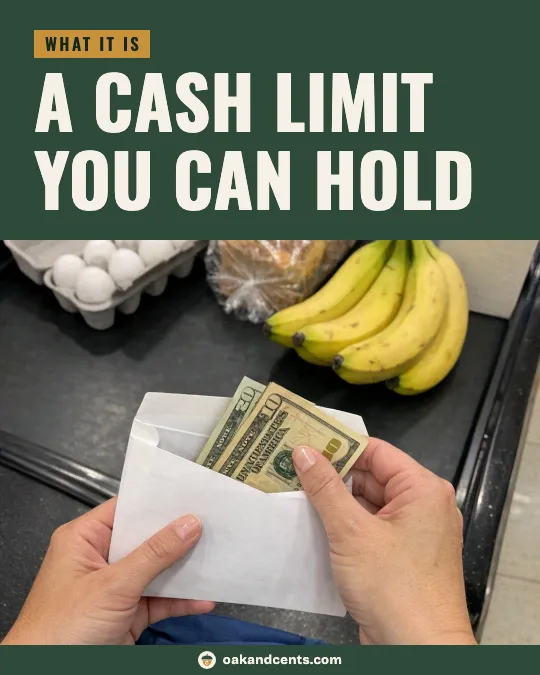
Cash stuffing is a newer name for the cash envelope system. The idea is simple and has been around a long time.
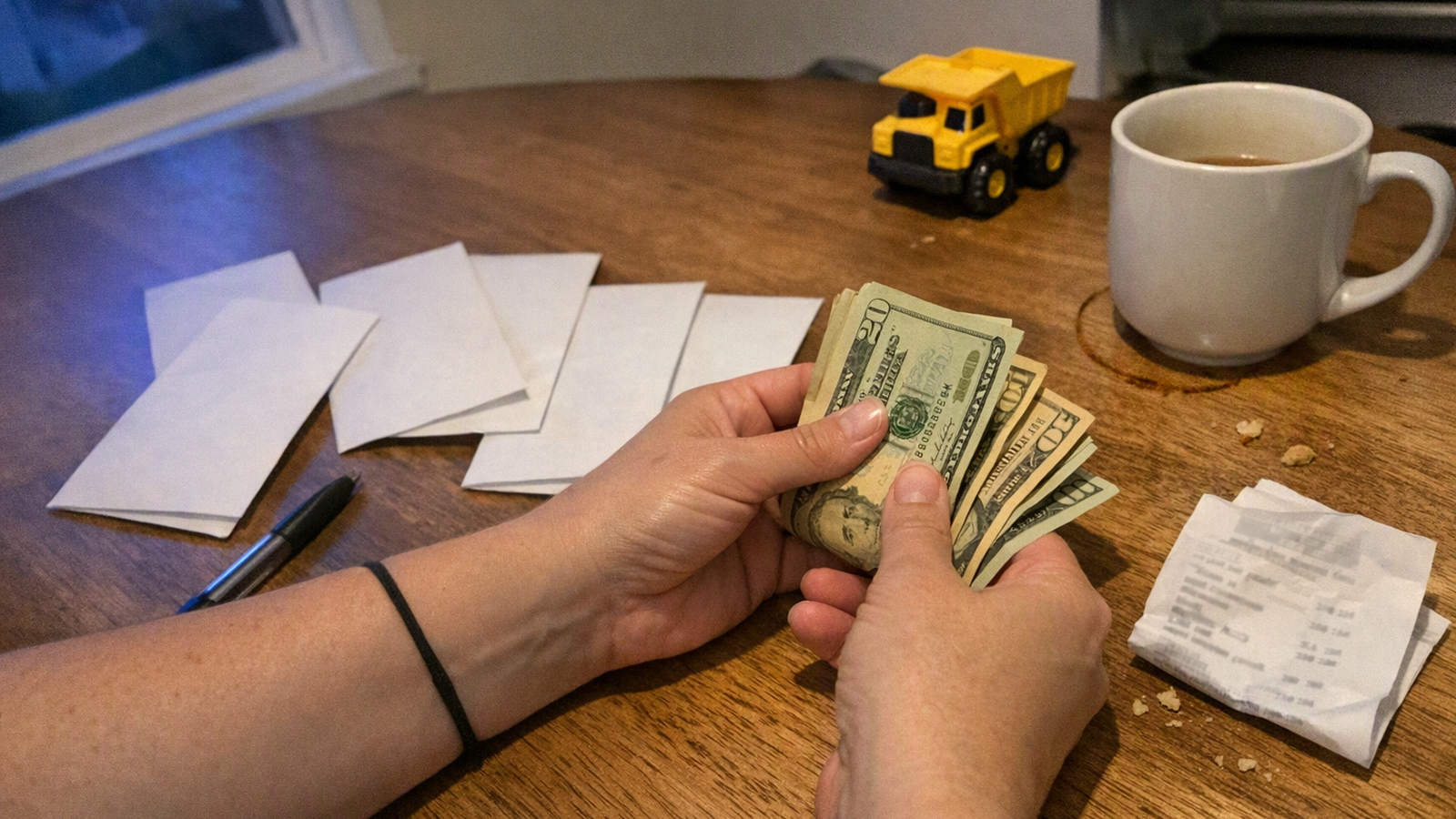
On payday, you take out cash for a few kinds of spending. You split it into envelopes, one per category, and you spend only from those envelopes until the next payday.
That’s the whole idea.
It works because cash is easy to see. When you open the grocery envelope on Thursday and there’s $40 inside, you know exactly what’s left. No app, no math, no surprise on the statement.
That doesn’t mean every dollar you earn turns into cash. Most of your money stays in the bank, where it pays the bills.
Cash stuffing covers only the spending that changes from week to week, the part that tends to drift.
Note: Cash kept at home isn’t covered by bank deposit insurance. Keep envelope amounts small, and only take out what you plan to spend before the next payday.
A limit you can hold is easier to keep than one you have to remember.
Keep Your Bills in the Bank and Stuff Only the Spending That Changes
Rent, the car payment and the power bill don’t need envelopes. They’re the same, or close to it, every month, and most can go out on autopay.
Envelopes work best for spending that changes, the kind that’s easy to nudge up without noticing.
Here are common envelopes for beginners:
- Groceries: the weekly shop, plus the milk and bread runs.
- Gas: fill ups for the car, or bus fare.
- Household and personal care: paper towels, shampoo, the drugstore run.
- Eating out: takeout, coffee and the drive through after practice.
- Fun money: a movie, a craft supply, a little something just for you.
Debt payments stay in the bank too. Keep every minimum on autopay, so cash stuffing never puts a due date at risk.
If you already budget by paycheck, cash stuffing slots right in. The bills come out first, then the envelopes get what’s left for everyday spending.
Bills in the bank, spending in envelopes. That one split keeps the system simple.
Start With 3 to 5 Envelopes, Not 20
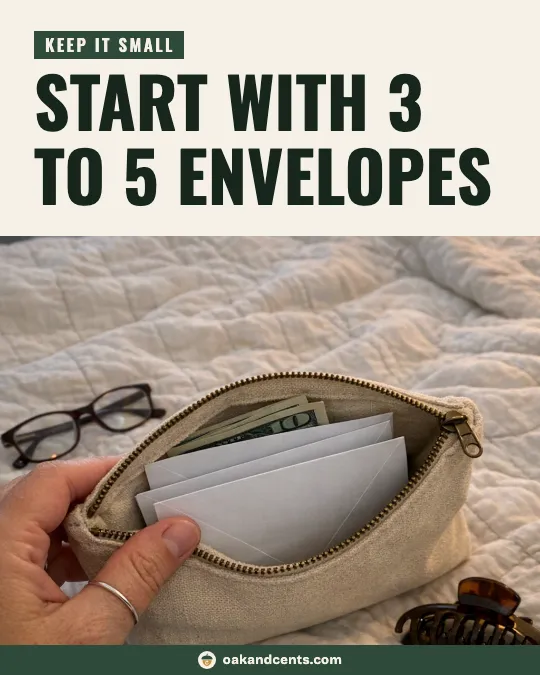
Scroll through cash stuffing videos and you’ll often see binders full of colorful envelopes. They look lovely, and they can make starting feel like a big project.
You don’t need that.
Three to five envelopes is plenty for your first month. Pick the categories where money tends to slip away without you noticing.
For many households, that’s groceries and eating out. Add gas if you drive a lot, and fun money so the plan doesn’t feel like a punishment.
Plain envelopes and a pen are enough. A zipper pouch or an old wallet can hold them all.
If you share money with a partner, decide together which envelopes you’ll start with and who carries which one. It saves a lot of “I thought you had the grocery money” moments.
After a month or two, you’ll know which envelopes help and which ones you don’t need. Add more then, if you want to.
A few envelopes you use beat a binder you never open.
Set Each Envelope’s Amount From Last Month’s Spending
The easiest way to pick an amount is to look back, not guess.
Open last month’s bank statement or app and add up what went to groceries, gas, eating out and so on. That’s your honest starting point.
Then split it by paychecks. If you’re paid every two weeks, many people simply halve the monthly number.
Here’s an example with made up numbers, for one paycheck:
| Envelope | Each paycheck |
|---|---|
| Groceries | $225 |
| Gas | $75 |
| Household and personal care | $40 |
| Eating out | $35 |
| Fun money | $25 |
| Total cash | $400 |
If last month’s eating out came to $160, don’t drop it to $20 overnight. A smaller step, like $35 a paycheck, is easier to keep.
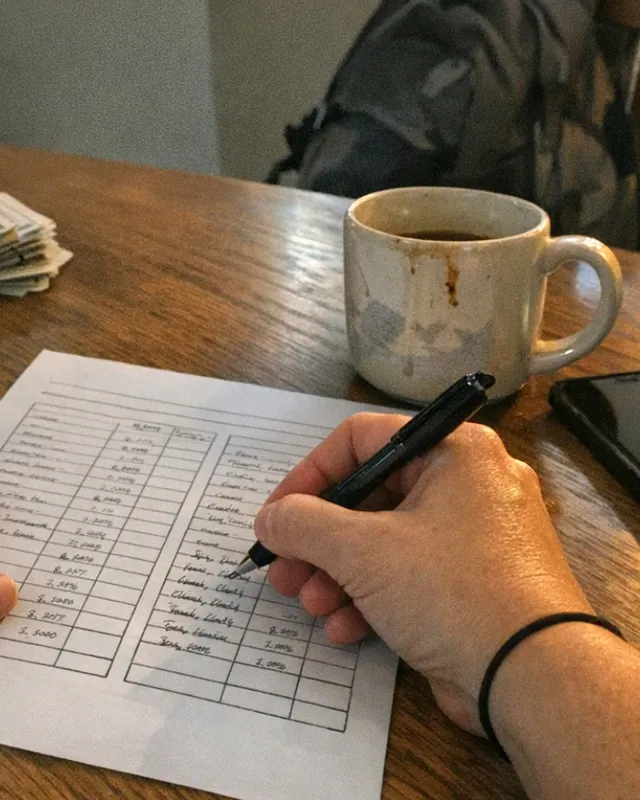
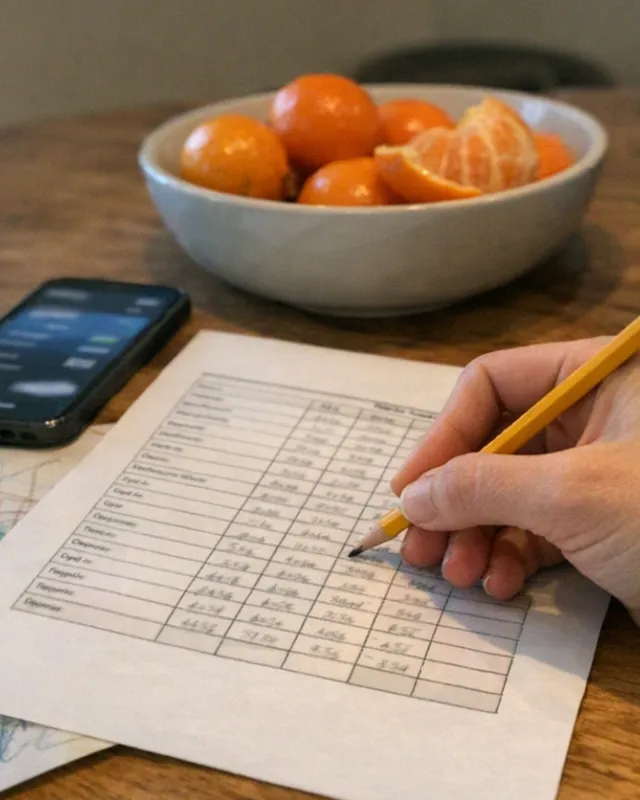
The free Monthly Budget sheet on this page has room for every category, planned and actual, so you can see the whole month in one place.
If you’d rather plan on a computer, our free paycheck budget spreadsheet shows what’s left from each paycheck after the bills.
Tight on the grocery number? Our guide on how to save money on groceries has habits that help it stretch.
An honest number you can keep beats a hopeful one you’ll break by Wednesday.
Stuff Your Envelopes on Payday
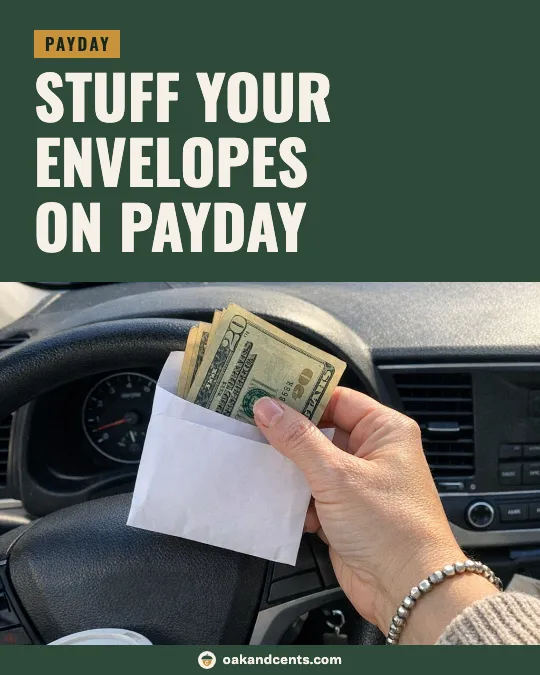
Payday is stuffing day. Doing it the same day each time turns it into a habit instead of a decision.
Take out the total cash for your envelopes at the bank or an ATM. Ask for smaller bills, so it’s easy to split.
Say this: “Could I get $400 in twenties, tens and fives, please? I’m splitting it into envelopes.”
At home, sit down with your envelopes and a pen. Write the amount on the front of each one, then count the cash in.
It takes about 10 minutes, and it can be oddly calming. Some people make it a small ritual with a cup of tea after the kids are in bed.
During the week, take only the envelopes you need for that trip. The grocery envelope goes to the store. The rest stay home, out of sight.
If you pay for something with a card by accident, take the same amount out of that envelope and set it aside to deposit later. The envelope still tells the truth.
Your plan in one line: bills in the bank, a few envelopes stuffed on payday and every envelope spent only on its own category.
Ten minutes on payday sets up the whole week.
When an Envelope Runs Out Before Payday
It’s Thursday, the grocery envelope is empty, and payday is Saturday. This is the moment many beginners worry about, and it’s completely normal.
It’s not a sign that you failed. It’s the system doing its job, showing you the limit before it showed up on a card.
You have three calm options:
- Wait. Use what’s in the pantry and freezer until payday.
- Borrow from another envelope. Move $15 from fun money to groceries. The total stays the same.
- Adjust next time. If groceries run short every week, the amount was too low. Raise it and lower another envelope.
What you don’t do is reach for the credit card. That’s the one move that turns a short week into new debt.
Each payday, before you restuff, take two minutes for a quick check. Which envelope ran out first? Which one had money left? Does one amount need to move a little?
The first month is mostly for learning your real numbers. It’s common to adjust your amounts once or twice before they settle.
An empty envelope is information, not a verdict.
Decide Where the Leftover Cash Goes
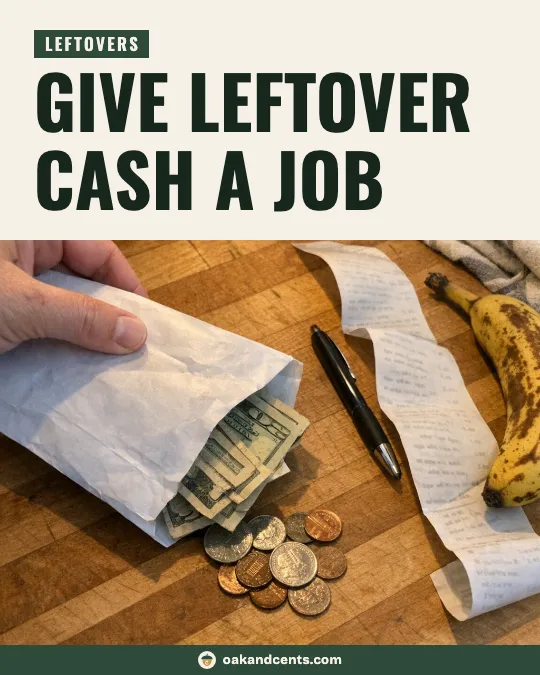
Sometimes an envelope ends the week with money still in it. That feels good, and it deserves a plan before it quietly turns into extra takeout.
Pick one of these ahead of time:
- Roll it over. Keep it in the same envelope, so next payday you need to add a little less.
- Start a sinking fund. Move it to an envelope for a cost you know is coming, like car repairs or Christmas. Our guide to sinking funds shows how those work.
- Pay down debt. Deposit it and add it to your next card payment.
- Build your cushion. If you don’t have emergency savings yet, it can go toward a starter emergency fund.
If you enjoy the envelope habit, a savings challenge can use the same skills. The 100 envelope challenge is a popular one.
Some people also jot each purchase on the back of the envelope. It takes seconds, and at the end of the month you can see exactly where the cash went.
Notice your wins, too. Ending a week with $12 left in the eating out envelope is a real step, even if nobody else sees it.
Leftover cash with a job does more than leftover cash that just sits there.
If Cash Doesn’t Work for You, Keep the Limits Anyway
Cash stuffing fits well when you have a regular paycheck, your bills are on autopay and most of your everyday spending happens in stores.
Think twice if most of your shopping is online or by delivery, since cash doesn’t work there. Some people keep those categories in the bank and track them on the free Expense Tracker instead.
Also think twice if carrying or keeping cash doesn’t feel safe where you live. A separate checking account for spending, with its own debit card, can play the same role.
If rent or other bills are already past due, catching up comes first, and a nonprofit credit counselor can help you plan the order. The National Foundation for Credit Counseling lists member agencies to choose from.
The method matters less than the habit of giving every dollar a limit you can see.
Stuff Your First Envelope This Payday
You can give that bank app a rest. This payday, try giving one category its own cash instead.
Before payday, look at last month’s grocery spending and pick your number. On payday, take that amount out, put it in an envelope and write the amount on the front.
Spend only from that envelope until the next payday, and notice how it feels to know exactly what’s left.
If you’re paying down a card, keep your free debt tracker next to your envelopes. Every week a card stays untouched shows up on that page.
One envelope this payday. You can add the rest later.