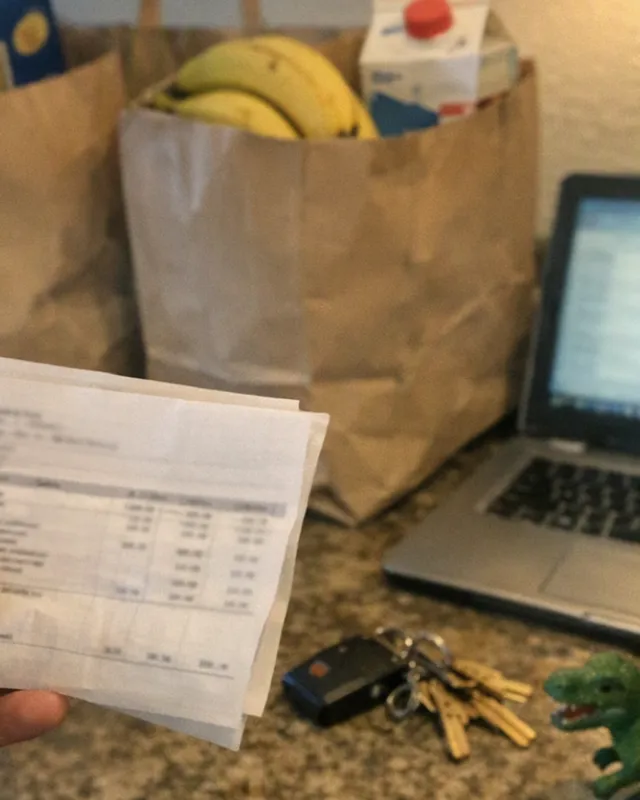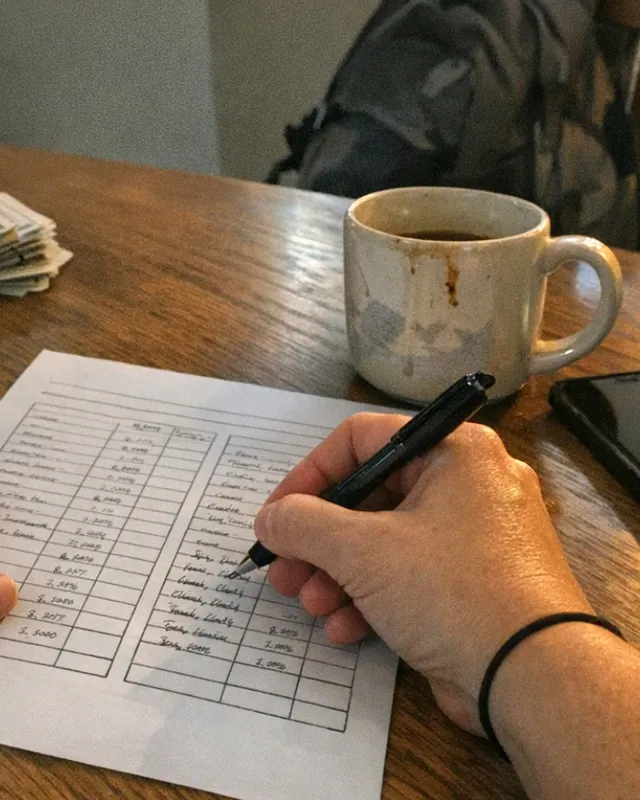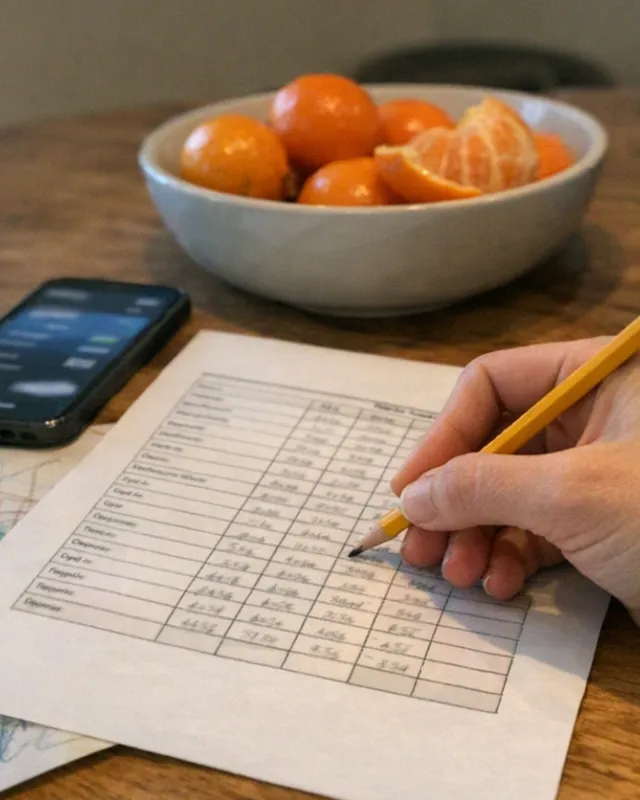
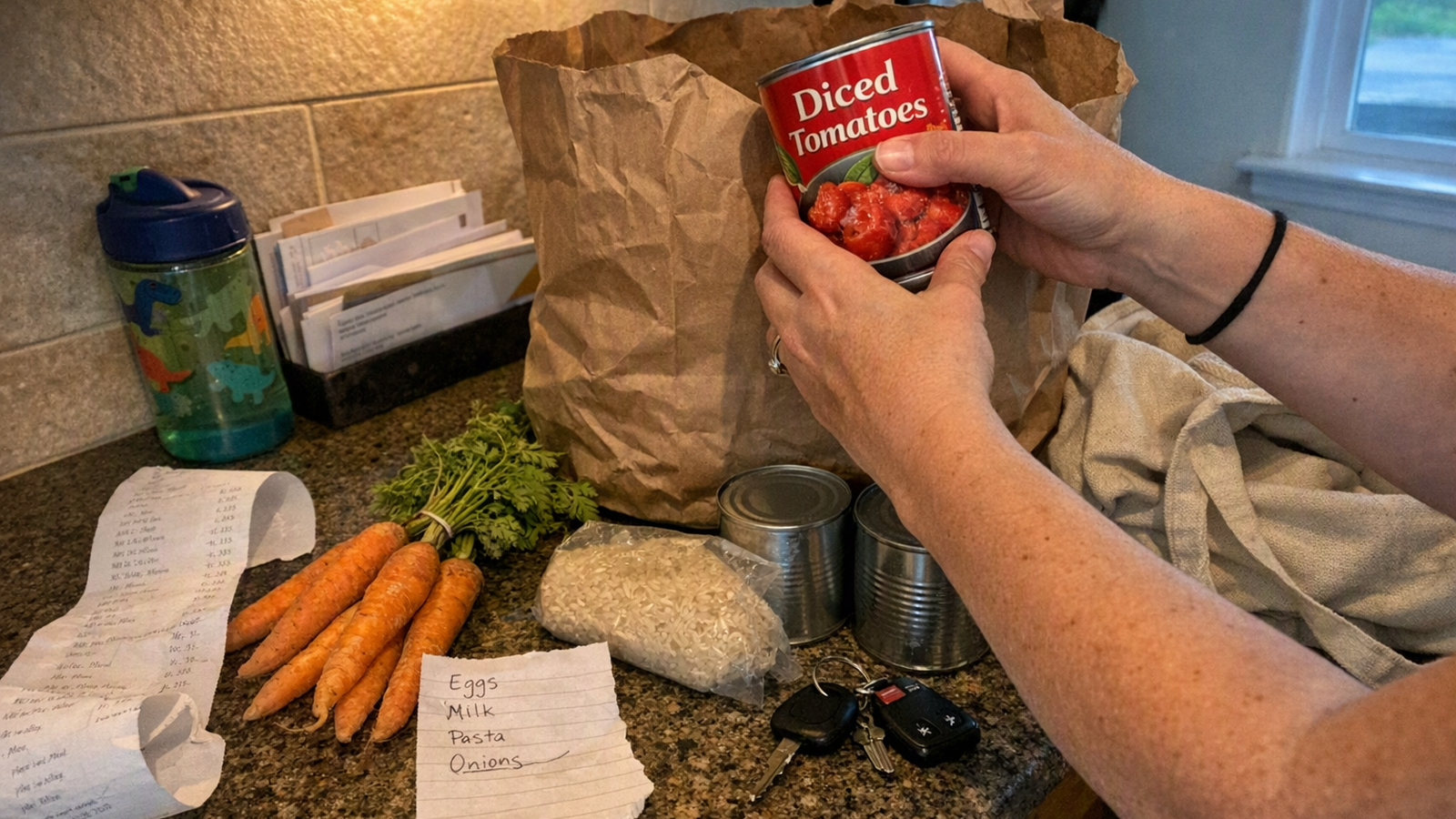
Coupons and cash back apps tend to get the credit for lower grocery bills. They can help a little. But the total at checkout usually jumps for plainer reasons: no list, no number and a quick stop at 6 p.m. when everyone’s hungry.
It can feel like you’re stuck between feeding your family well and keeping the card balance from creeping up. Wanting both doesn’t make you careless with money. Busy weeks just make any plan harder to keep.
Saving on groceries isn’t about extreme couponing or plain rice every night. It’s a handful of small habits that each save a few dollars a trip. Here are 15 to choose from, and one to start before your next shop.
1. Shop Your Fridge and Pantry Before You Write a List
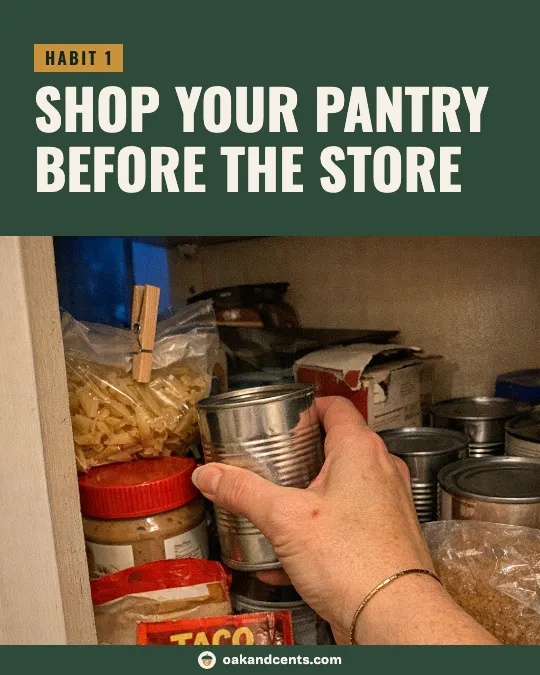
You open the cupboard and find three cans of black beans you don’t remember buying. That’s money already spent, waiting to become dinner.
Before you write a list, take five minutes with the fridge, the freezer and the pantry shelf.
It can feel like one more chore after a long day. But it saves money before you even leave the house.
Look for what needs using first: the half bag of spinach, the open jar of salsa, the chicken in the back of the freezer. Build two or three meals around those.
Try this: Take a quick photo of the fridge and the pantry shelf before you go. Check it in the store before you grab a second jar of anything.
The cheapest meal is the one already in your kitchen.
2. Write the List From What’s Missing, Then Shop the List
Once you know what you have, the list nearly writes itself. It’s just the gaps.
A list can feel strict, so it’s tempting to shop from memory. That’s how the extras slip into the cart: a new dip, a second cereal, the chips that were on an end display.
You don’t have to cut every treat. Give the list one line called “one treat,” and let that be the one.
Group the list by the store’s layout, like produce, dairy, then frozen, so you walk each aisle once.
A list with one treat on it is easier to keep than a list with none.
3. Build the Week’s Meals Around What’s on Sale
With the list started, the next question is what to cook. It’s natural to pick recipes first and then pay whatever the ingredients cost that week.
Flip the order. Open the store’s weekly flyer or app before you plan, and see which proteins and produce are marked down.
If chicken thighs are on sale, that’s taco night and a sheet pan dinner. If cabbage is cheap, it goes in the stir fry and the soup.
That doesn’t mean chasing deals across three stores. One store, one flyer, five minutes.
Let the sale pick dinner, and let the recipe bend to fit it.
4. Keep Two or Three Backup Dinners for Nights That Fall Apart
Even a good meal plan meets a late practice, a sick kid or a long day at work. Those are the nights when takeout starts to feel like the only option.
That’s not a planning failure. It’s just a Wednesday.
A backup dinner is a meal you can make in about 15 minutes from things that keep: pasta with jarred sauce, breakfast for dinner, quesadillas or frozen vegetable fried rice.
Keep what you need for two or three of them in the pantry, and leave them out of the week’s plan.
Here’s a made up example. If a backup dinner costs $10 and replaces a $25 takeout order, that’s $15 back each time.
The easy option can be the cheap one, too.
5. Eat Something Before You Walk Into the Store
Backup dinners take care of the evening. Hungry shopping is the next leak, and it starts before you even grab a cart.
When you’re hungry, the bakery and the snack aisle look like a very reasonable idea.
That’s not weak willpower. Hunger makes food look better, for everyone.
Eat a snack, a piece of fruit or a handful of crackers before you go, and give the kids one too.
Note: Leaving the kids at home isn’t always possible, and that’s okay. Letting each child pick one item from the list can turn a tug of war into a small job.
A full stomach might be the best coupon you’ll ever use.
6. Check the Unit Price, Not Just the Big Number

In the aisle, the next trap is the big price on the tag. A larger box can cost more today and still be the better deal, or the other way around.
The unit price is the cost per ounce, pound or count. Many stores print it in small type on the shelf tag.
Compare unit prices side by side, and the better buy usually becomes clear.
Bulk is worth it only when the unit price is lower and you’ll use it all before it spoils.
If the big pack takes money from this week’s number, the smaller size is fine for now.
The biggest package isn’t always the bargain. The unit price tells you which one is.
7. Try the Store Brand on Basics You Won’t Notice
Once you’re reading unit prices, store brands start to stand out. Side by side, they’re often the lower price per ounce.
Switching everything at once can feel risky, especially with picky eaters at home.
You don’t have to. Try one swap a week on basics like flour, sugar, canned tomatoes, frozen vegetables, rice or oats.
If nobody notices, keep it. If someone does, go back to the name brand for that item and try a different swap next week.
One quiet swap at a time is how a cheaper cart happens.
8. Buy Produce That Keeps, and Eat the Delicate Things First
Fresh produce is where a lot of grocery money ends up in the trash. Berries and lettuce can turn in just a few days.
That isn’t careless shopping. Some foods simply have a short clock.
Mix in produce that lasts: carrots, cabbage, apples, onions, potatoes, and frozen fruit and vegetables.
Then eat in order. Berries, lettuce and fresh herbs go early in the week, and the hardy ones fill in the second half.
Keep the most fragile things at eye level in the fridge, so they get eaten before they get forgotten.
Food you eat is groceries. Food you toss is a bill.
9. Read “Best If Used By” as a Quality Date
Keeping food longer brings up the dates on the package. Plenty of good food gets tossed on the day printed on the lid.
Those dates often mean something different from what they seem. Except for infant formula, the dates on food are about quality, not safety, and aren’t required by federal law, the USDA explains.
A “best if used by” date tells you when the flavor or quality is at its best. It isn’t a purchase or safety date.
That doesn’t mean eating anything past its date. Look at it, smell it and follow the storage advice on the label. If something seems off, toss it.
The date is a hint about quality, not an appointment with the trash can.
10. Cook Once and Plan to Eat It Twice

Using food before it turns gets easier when some meals are made to last. That’s where cooking once and eating twice comes in.
Cooking a fresh dinner every night can feel like the only real way to feed a family. It’s also tiring, and tired nights tend to become takeout nights.
So make a double batch of something that reheats well: chili, soup, a pasta bake or shredded chicken.
Eat half tonight. Put the rest in the fridge or freezer for a busy night later in the week.
A pot of chili can be dinner on Monday and baked potato topping on Thursday.
One evening of cooking can cover two nights. That’s time and money back.
11. Swap Quick Stops for One Planned Trip a Week
With meals planned and a few in the freezer, the quick stops start to fade. That helps, because quick stops are where extras tend to live.
You run in for milk and walk out with milk, bread, a rotisserie chicken and a candle that was on sale.
That’s not a lack of willpower. Every trip through a store is one more chance to see something you want.
Here’s a made up example. Two quick stops a week with about $5 of extras each adds $10 to the week.
If your family goes through milk fast, buy two gallons on the planned trip, or keep shelf stable milk in the pantry for the gap days.
Fewer trips means fewer chances for the total to jump.
12. Keep a Running Total While You Shop
Shopping once a week makes the next habit easier: knowing your total before the cashier does.
Checkout can be the most stressful moment of the trip. The number appears, and it’s too late to change much.
Use the calculator on your phone and round each item up to the next dollar. For example, a $2.29 can of tomatoes counts as $3.
Rounding up means the real total usually lands a little lower, which is a nice surprise.
If your store offers online pickup, the cart shows the total before you pay. Just check for a pickup fee first.
No surprise at the register is its own kind of savings.
13. Give Groceries One Weekly Number and Its Own Envelope
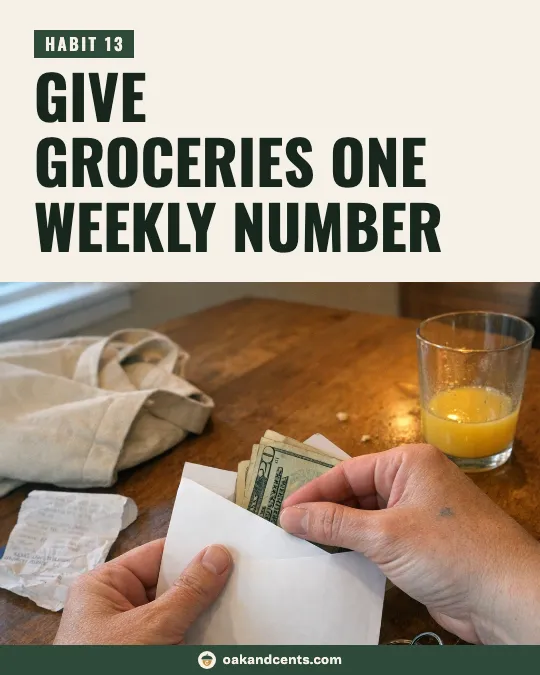
A running total works best when there’s a number to measure it against. That’s your weekly grocery number.
Without one, groceries quietly borrow from everything else, including the card payment.
Start with what you actually spent. Add up the last four weeks of grocery receipts or bank charges, divide by four, then trim a little, maybe $10.
For a reference point, the USDA updates what a healthy diet at home costs each month at four budget levels, from Thrifty to Liberal, in its food plan reports.
Then give that number a home: cash in an envelope if you like cash stuffing, or a separate account or debit card used only for food. If you budget by paycheck, split it across each payday.
The free expense tracker on this page has room to log every trip and see what’s left.
When the envelope is empty, the week’s shopping is done.
14. Send What You Save Straight to Your Card
Once groceries have a number, the money you don’t spend needs somewhere to go. Otherwise it drifts into the next takeout order.
Saving $15 at the store only helps your debt if it actually reaches the card.
Here’s how three habits from this list might add up. The numbers are made up, just to show the math.
| Small habit | Example savings a week | Over a year |
|---|---|---|
| Store brand on a few basics | $4 | $208 |
| One planned trip instead of quick stops | $10 | $520 |
| One backup dinner instead of takeout | $15 | $780 |
| Total | $29 | $1,508 |
After each shop, move what’s left of the grocery number to your card or your savings. If you’re working through more than one debt, send it to the one you’re paying off first.
The debt payoff calculator can show what an extra $29 a week, about $126 a month, does to your payoff date.
Groceries are one place to find money. Lowering your monthly bills is another.
Money you move on purpose does far more than money you meant to save.
15. Count Your Good Weeks Before the One That Went Over
Some weeks the number just won’t hold. A birthday, a sick kid, a week where everything ran late and the pizza got ordered.
It’s easy to see one week over budget as proof the plan doesn’t work. That thought can do more harm than the extra $30 ever did.
A grocery budget isn’t a test you pass or fail every Saturday. It’s a habit you’re practicing, and practice includes weeks that wobble.
So look at four weeks together instead of one. If three landed close to the number and one went over, the plan is working.
Here’s a made up month with a $150 weekly number: $150, $145, $190 and $155. That’s $640 for four weeks, or $160 a week on average, just $10 over.
Instead of starting over, pick the one habit that slipped and bring back just that one next week.
Notice the small wins, too. The week you used up the spinach. The night the backup pasta replaced a takeout order. The trip where your running total matched the receipt.
Progress on groceries looks like a trend, not a streak.
When Food Money Is Already Too Tight
Some months, the habits above aren’t enough because there simply isn’t enough coming in. That’s not a planning problem, and you haven’t done anything wrong.
SNAP provides food benefits to low income families to help with their grocery budget, according to the USDA. Local food banks can help, too.
If groceries keep landing on a credit card, or bills are already past due, a nonprofit credit counselor can help you sort what to pay first. The National Foundation for Credit Counseling can match you with one.
Getting help with food is part of the plan, not a step away from it.
Start With One Habit Before Your Next Shop
Bringing that checkout total down doesn’t take all 15 habits at once.
Pick one for this week. Shopping your pantry first is a good place to begin, because it works before you spend a cent.
Next week, add one more. Small habits stack, and the receipt starts to show it.
When you send the savings to a card, keep the free debt tracker nearby and mark each extra payment.
One habit this week. That’s the whole assignment.