In a made up example, one $1,850 paycheck has to cover $1,538 in bills. The very next one covers $292. Same pay, two very different weeks.
One payday feels impossibly tight, the next feels roomy, and the roomy one is easy to spend before the tight one comes back. That seesaw comes from how due dates fall, not from anything you did.
What helps is giving every paycheck its job before it lands. This free paycheck budget template does that two ways: a one page printable for biweekly pay, and a spreadsheet that matches each bill to a paycheck for you.
Pick Paper or Screen: Two Free Versions
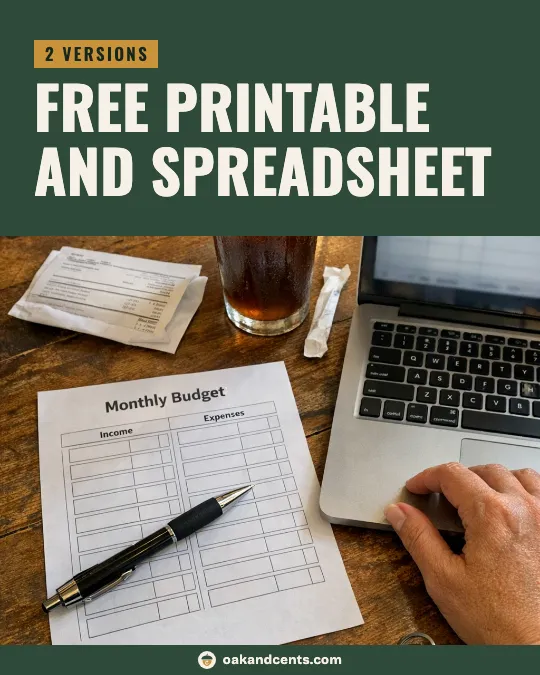
Some people think best with a pencil in hand. Others would rather type a number and let the screen do the adding. Both are covered here, and both are free.
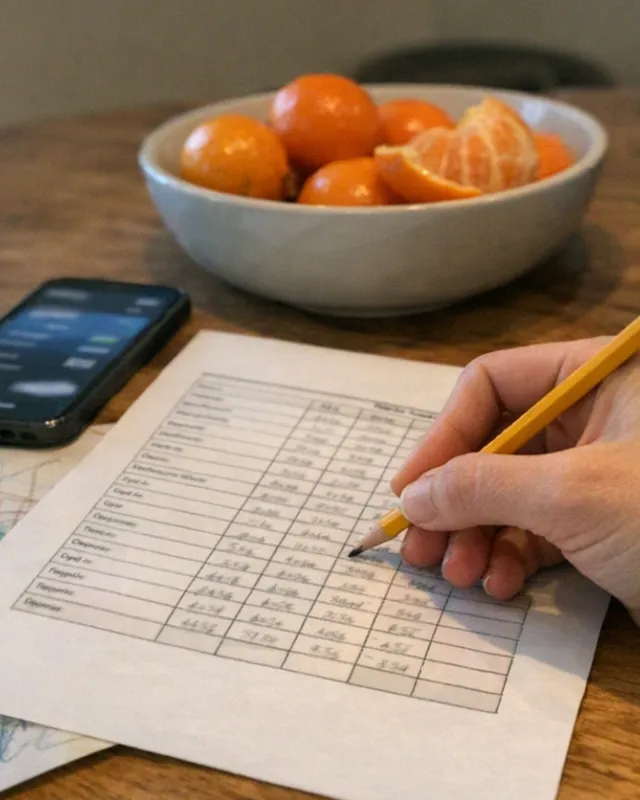
The printable is one page for one month, made for people paid every two weeks. You write your two paychecks side by side and place each bill under the one that pays it.
The spreadsheet is an Excel file that works in Google Sheets too. It works for weekly or every 2 weeks pay, places each bill for you and looks ahead six paychecks.
That doesn’t mean you have to pick one forever. You can keep the printed page on the fridge and use the spreadsheet for looking ahead.
There’s no sign up for either one. Both downloads are in the box on this page.
If budgeting by paycheck is new to you, budget by paycheck explains the idea in four steps. This guide is about the templates themselves: what’s on them and how to fill them in.
Paper or screen, the job is the same. Every bill gets a paycheck.
What’s on the Biweekly Paycheck Budget Printable
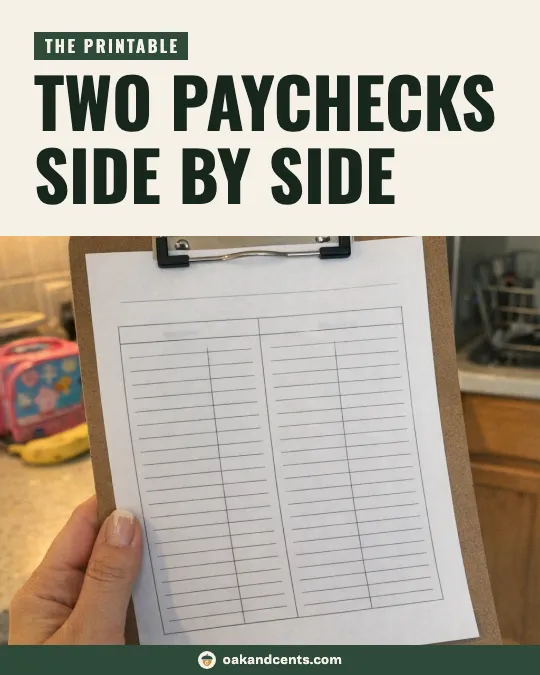
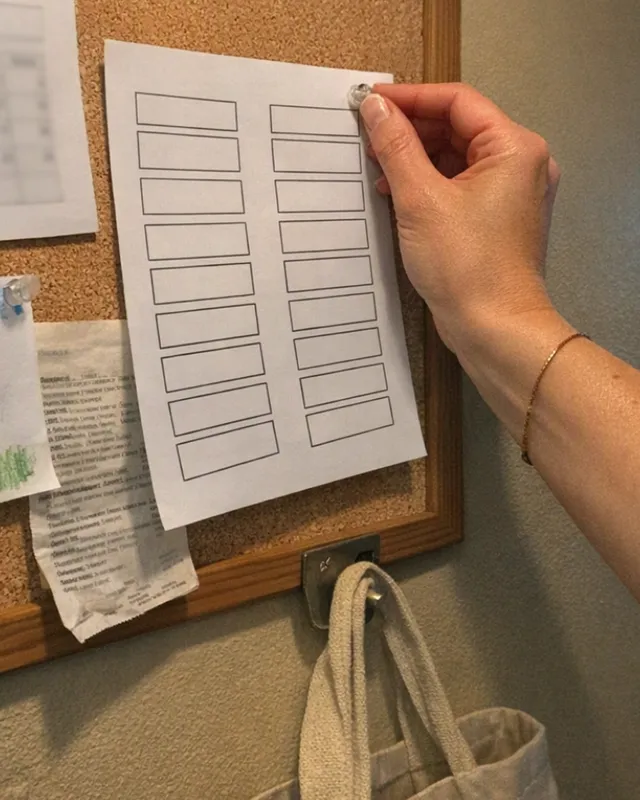
The printable is a single page, mostly white with thin lines, so it’s easy to write on with any pen. Here’s what you’ll find from top to bottom:
- Month and year, plus a short How it works box: write your paydays, match each bill, see what’s left.
- Paycheck 1 and Paycheck 2 side by side, each with a line for the date and the amount.
- 16 bill rows, each with a box for the day of the month it’s due.
- Two lines under each paycheck: total bills from this paycheck, and left after bills.
- A third paycheck box, with a line to write down the months you get three paydays.
Ten of the bill rows are already labeled: rent or mortgage, electric, water and trash, phone, internet, car payment, car insurance, childcare, subscriptions and credit card minimum. The other six are blank for your own.
A Good to know box at the bottom adds two tips. A big bill like rent can be split, half from each paycheck.
And left after bills is meant for the costs that move around, like groceries, gas and fun, plus savings and any extra debt payment.
One page, two paychecks and a home for every bill.
Fill In the Printable With Your Own Paydays
Start at the top. Write the month, then the date and amount of each paycheck.
Next, list your bills with the day each one is due. Then write each bill’s amount under the paycheck that arrives before its due date.
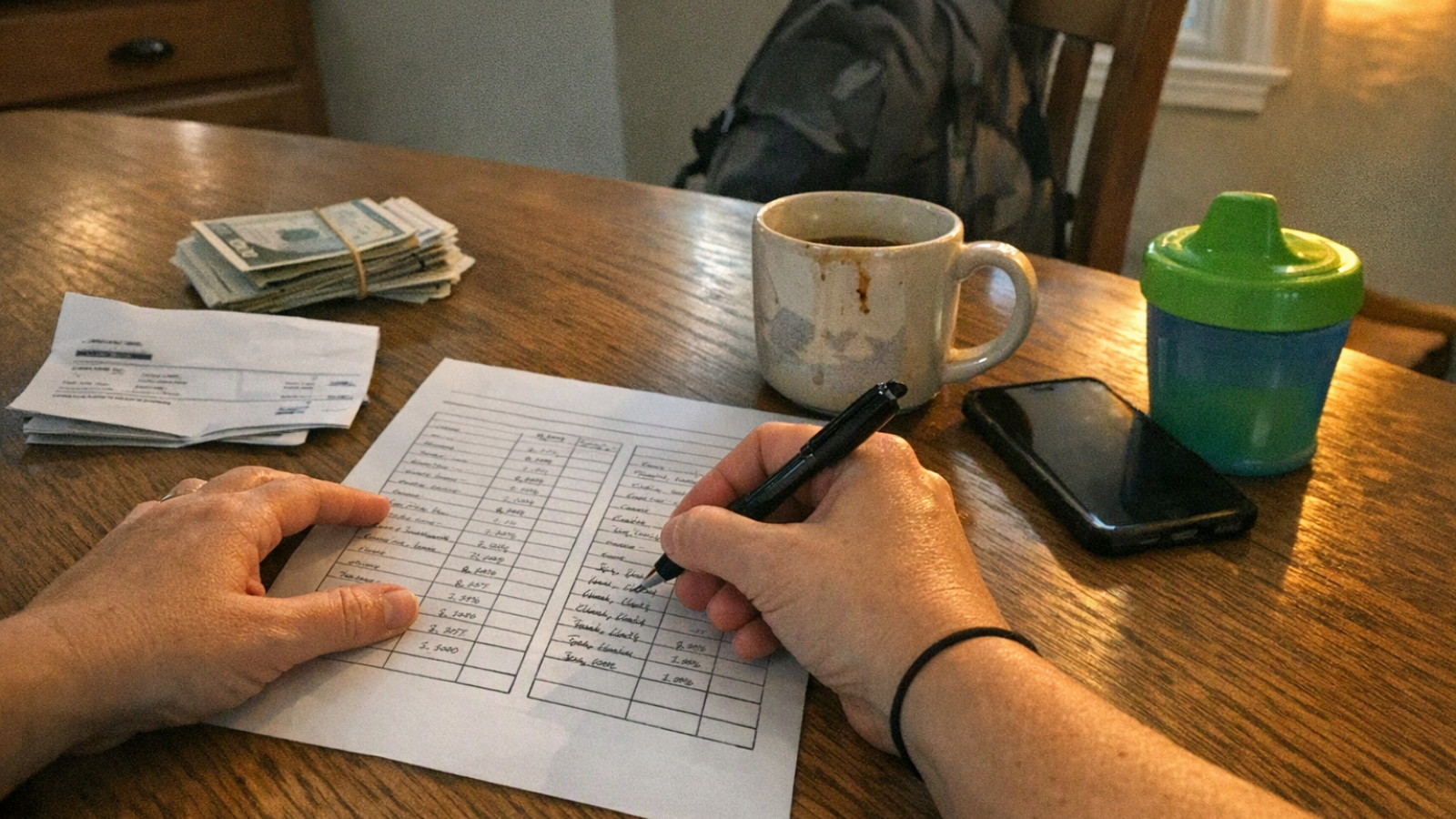
Here’s a made up month to show how a filled in page looks. Paydays are the 3rd and the 17th, $1,600 each:
| Bill | Due | Paycheck 1 (the 3rd) | Paycheck 2 (the 17th) |
|---|---|---|---|
| Rent | 1st | $1,100 | |
| Car insurance | 5th | $95 | |
| Credit card minimum | 9th | $75 | |
| Electric | 12th | $110 | |
| Subscriptions | 15th | $20 | |
| Phone | 18th | $60 | |
| Internet | 22nd | $55 | |
| Total bills | $300 | $1,215 | |
| Left after bills | $1,300 | $385 |
Rent is due on the 1st, so it comes from the paycheck on the 17th, the last one before the 1st.
Add up the bills under each paycheck for its total, then subtract that from the paycheck. In the example, the first paycheck has $1,300 left after bills. The second has only $385.
That gap is exactly what the page is meant to show you. You see it on paper the night before, not in your bank app halfway through the week.
Leave groceries and gas off the bill rows for now. They come out of left after bills, once every bill has its place.
Place the bills first. Everything else fits around them.
Split a Big Bill Like Rent Across Both Paychecks
In the example, $385 has to cover two weeks of groceries, gas and everything else. That’s tight, even though the month as a whole has room.
The printable’s Good to know box points to a simple fix: split a big bill, half from each paycheck.
So instead of $1,100 coming from the 17th, set aside $550 from each paycheck. The half from the 3rd waits in checking, or in a labeled envelope, until rent is due.
Now the first paycheck has $750 left after bills, and the second has $935. Same bills, same pay, much calmer weeks.
That doesn’t mean paying your landlord twice. You still pay rent once, on time. You just start setting aside half of it two weeks early.
The one rule is that the early half has to stay put. If it gets spent on a busy week, rent comes up short.
Why it matters: When the biggest bill is split in two, neither paycheck has to carry it alone, and the heavy payday stops feeling like a cliff.
If you like cash, cash stuffing works well here. One envelope holds the rent half, so it can’t drift into the grocery cart.
Split the heavy bill, and both paydays get room to breathe.
Let the Spreadsheet Do the Matching for You
If you’d rather not place every bill by hand, the free paycheck budget template places them for you. Its first tab is a short How to use page.
On the Paycheck Planner tab, fill in four things at the top. They are how often you’re paid, your next payday, your usual take home pay and what’s in checking before that payday.
How often you’re paid is a choice of two: every week or every 2 weeks.
Then list your bills with the day each one is due, up to 20 of them. The sheet works out each bill’s next due date and which paycheck should pay it.
A bill due on the 31st lands on the last day of shorter months, so there’s nothing to adjust.
Below the bills, add the spending that comes out of every paycheck, like groceries, gas and a little savings.
The bottom rows show your next 6 paychecks at a glance: the paycheck amount, bills before the next payday, spending, what’s left and a running total. When a paycheck comes up short, its number turns red.
In the sheet’s own made up example, $1,850 every 2 weeks, both paychecks that cover rent come up short on their own. The running total still never drops below $705, because the paychecks before them leave enough.
One row is easy to miss: Paycheck different from usual? Type the amount there for a short week or a week with extra hours.
Every couple of weeks, change your next payday to the coming one, and all six paychecks move forward with it.
Type the bills once. The sheet does the matching every payday after that.
Fill In the Next Paycheck the Night Before Payday
A template only helps if it gets a few minutes before the money lands.
The night before payday, take ten minutes. Check which bills this paycheck covers, write in the amount you expect and look at what’s left after bills.
Then give that leftover a job before morning: groceries and gas first, then a little savings and any extra debt payment.
If the leftover looks thin, look at the paycheck after it too. Holding a little back from a roomy payday keeps the next tight one off a card.
If it helps to see where the grocery money goes, the free expense tracker has 25 rows for what you spend each month.
Paid every 2 weeks? A note on the printable points out that this means 26 paychecks a year, which usually puts three paydays in two of your months.
Plan your bills on two paychecks, and the third can go to an extra debt payment, savings or a once a year bill.
Paying down a card at the same time? The debt payoff calculator shows what a steady extra payment does to your payoff date.
Ten minutes the night before saves a lot of guessing the week after.
If Left After Bills Keeps Coming Up Short
Sometimes the page shows a gap that splitting rent can’t close. Both paychecks come up short, month after month.
That’s hard to look at in black and white. It isn’t a failure, yours or the page’s. It’s a clear picture, and a clear picture is where real fixes start.
Start with the bills themselves. A due date in the wrong week can sometimes be moved with one call, and these ideas for trimming regular bills are worth a look.
Some landlords may agree to rent in two halves, too. It doesn’t hurt to ask.
Say this: “My pay comes every other Friday. Would you be open to me paying rent in two halves, on the 1st and the 15th?”
If bills are already past due, keep housing, utilities and food first, and call the companies you owe before more payments are missed. Our steps for months with nothing left over walk through what comes first.
A nonprofit credit counselor can look over the filled in page with you and help you plan around the gap. The National Foundation for Credit Counseling connects people with nonprofit counselors who offer that kind of help.
A short paycheck on paper is far easier to fix than a surprise in your bank account.
Before Friday, Give Both Paychecks a Job
The paycheck carrying $1,538 in bills and the one carrying $292 were never really the problem. They just needed a plan that could see both at once.
Tonight, print the page or open the spreadsheet. Write in your next two paydays and every bill with its due date.
Before your next payday, place each bill under the paycheck that pays it, and split the biggest one if the load looks lopsided.
Then let each paycheck’s leftover take its job: groceries and gas, a little savings and maybe something extra on debt.
Two paychecks, one page, and no more guessing which one pays the rent.