
A video online makes it look easy: drive for a delivery app a few evenings, and the card is gone by spring. Then the first payout lands, and after gas, fees and a tired Saturday, it’s smaller than promised.
That leaves you caught between two pulls. You want the card balance to move faster, but you don’t want to give up every evening with your kids to do it. Wanting both is reasonable.
The answer isn’t a second full time job. It’s one small, steady income beside the job you have, with every dollar sent to one debt. Here are 12 ideas, their real pay where good data exists, and how to choose.
1. Ask for Extra Shifts at the Job You Already Have
You already know the building, the people and how payroll works. That’s a head start no app can give you.
The worry is that asking sounds like you’re struggling. It doesn’t. Managers cover holiday weeks and sick days all the time, and many would rather ask someone they trust.
If you’re paid hourly and your job isn’t exempt, hours over 40 in a workweek are paid at least time and a half. The Department of Labor explains who that covers.
Say this: “If any extra shifts open up this month, I’d be glad to pick them up. Could you keep me in mind?”
Honest pay: your usual rate, sometimes more for overtime. No startup costs, and taxes come out of the paycheck like always.
Extra hours at a job you know are the gentlest place to begin.
2. Sell What You No Longer Use Before You Take On New Work
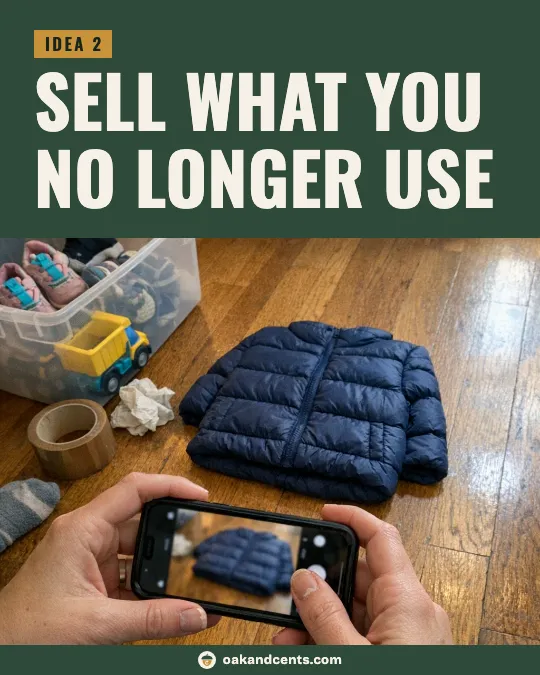
If extra shifts aren’t on offer, the next easiest money is often already in your house.
There’s a bin in the garage with a stroller nobody rides in anymore, a bread maker used twice and kids’ coats in the wrong sizes.
Listing a $10 item can feel a little silly. But small sales add up, and nobody gets your Saturdays in return.
Start with things that are clean, working and easy to photograph. Price them by what the same item actually sold for nearby, not what people are asking.
Meet buyers somewhere public, and make sure the payment has gone through before you hand anything over.
Honest pay: whatever each item sells for, once. It isn’t steady, but there’s no boss and no schedule.
A lighter closet and a lighter balance can start on the same evening.
3. Babysit for Families You Already Know
Once the closet is emptier, you might notice that skills you use every day are worth something to someone else. Childcare is one of them.
Friends, neighbors and families from school often need someone for a date night, a teacher workday or a late shift. Some need the same help every week, like a Tuesday pickup, and a standing spot like that is steady money.
The hard part is the price. Asking too much feels awkward, and asking too little feels worse.
A national figure gives you a place to start. The Bureau of Labor Statistics puts the median for childcare workers on payroll at $16.82 an hour in May 2025, with most paid about $12 to $22.
What you charge a family privately is up to the two of you. It shifts with your area and the number of kids.
Honest pay: often paid the same night. Ask a few local parents what sitters charge before you name your rate.
Your evenings are worth an honest number.
4. Walk Dogs or Pet Sit While Neighbors Travel

Pet sitting sounds like a job for animal experts. Mostly, it’s about being reliable.
Neighbors who work long days may want a dog walked at lunch every weekday, and others travel for weddings and long weekends. A regular midday walk can fit between school drop off and pickup, week after week.
You can find clients through neighbors, or through pet care apps, which often keep a share of each booking. Read the fee page before you sign up.
Be honest about what you can handle. A big dog that pulls on the leash is a different job from feeding a cat.
Honest pay: a rate you choose, and towns differ a lot. Casual pet sitting has no reliable national figure, so look at what local sitters post before you set yours.
One dependable yes to a neighbor can turn into a weekly client.
5. Clean Homes or Rentals on a Weekend Morning
If you can get a kitchen back to normal after a birthday party, you already know this job.
Busy households, older neighbors and people who rent out a room often want a regular clean. One or two homes on a weekly or every other week schedule can fit around your job and stay manageable.
The catch is the hidden cost. Supplies, gas and your back all count, so agree on one price per visit and a short list of what’s included.
Honest pay: whatever you and each household agree on, and local rates shape that a lot. Subtract supplies and the drive, and what’s left is your real rate.
Clear terms protect the friendship and the paycheck.
6. Deliver Groceries or Takeout While the Kids Are at School
Delivery apps are often the first side hustle people try. You pick your hours, and the work can fit between drop off and pickup.
The costs are quieter. Gas and wear on your car can eat into an afternoon’s pay.
Many apps show an estimate before you accept an order, so you can pass on the ones that won’t cover the drive.
Drivers for delivery apps are usually treated as independent contractors, so taxes often aren’t taken out for you. More on that below.
Honest pay: depends on the app, your city, the time of day and tips. Track your miles and gas for two weeks to find your real number.
What lands in your account matters more than what the app shows.
7. Keep a Regular Weekend Shift at a Store
A part time store job can give you the same two weekend shifts every week, all year. That kind of routine is easy to build a payoff plan around.
It’s also one of the few side jobs with clear public pay. The Bureau of Labor Statistics reports a median of $17.03 an hour for retail salespeople in May 2025, with most between about $13 and $23.
Your store and area will move that number. The same page notes that workers sometimes pick up extra shifts during holidays and other busy sales periods, so a weekend job can stretch when you want more.
One gentle warning: the employee discount isn’t extra income. Decide now that it’s only for things already on your list.
Honest pay: an hourly wage on a regular paycheck, with taxes withheld, which can feel calmer than tracking delivery app payouts.
Steady and a little boring is often what a payoff plan needs.
8. Work a Few Restaurant Shifts for Tips
If you like the pace of a store but want evening hours, restaurants are the next step over.
A host stand, a Sunday brunch, the same Friday dinner shift every week: restaurants often need people for exactly the hours many parents are free. A regular spot on the schedule is what turns it into a side income.
Tips make the pay swing.
Here’s what that swing looks like nationally. Counting tips, half of waiters and waitresses earned more than $16.94 an hour in May 2025 and half earned less, according to the Bureau of Labor Statistics.
The lowest paid tenth made under $8.70, while the top tenth made over $31. A slow Tuesday and a packed Saturday can feel like two different jobs.
Honest pay: an hourly base, then tips that rise and fall with the crowd. Add up a full month of shifts before you count on it.
The busy nights pay well. The slow ones still cost a sitter.
9. Tutor or Help With Homework in a Subject You Know
Maybe you’re the parent who can still do long division, or the one who reads every school email twice. That patience is useful.
Families look for help with reading, math and plain homework time. Some tutoring happens at a kitchen table, some online after dinner.
The worry is not feeling qualified. For younger kids, families usually want someone calm, patient and good at the subject. For high school classes, they may expect more, so be clear about what you know.
Honest pay: set between you and the family, and it varies by subject and area. Ask local parents what’s typical before you set a rate.
Start with one student and see how the evenings feel.
10. Rake Leaves and Do Yard Work Close to Home

Every fall, the same thing happens on your street. The leaves come down faster than anyone wants to rake them.
Yard work is seasonal, easy to explain and easy to find on foot. Knock on a few doors, or post once in a neighborhood group.
Grounds maintenance workers earned a median of $19.27 an hour in May 2025, and most earned between about $15 and $28, according to the Bureau of Labor Statistics.
That’s for people on payroll. Neighbor jobs are usually priced by the yard, and you probably own a rake already.
Honest pay: a flat price per yard that varies by area. Busy in fall and spring, quiet in winter.
Start with what’s in the garage, not what’s on sale.
11. Offer Organizing or Admin Help Online
If you keep the family calendar running, you already do admin work. Some small businesses pay for exactly that: email, scheduling, data entry.
This is also where scams like to hide. The Federal Trade Commission warns about fake job ads for virtual assistants, nannies and caregivers. It says honest employers will never ask you to pay to get a job.
If someone sends you a check and asks you to send part of it back, walk away. Start with people you can check out, like a local business or a past employer.
Honest pay: set between you and the client, and it varies widely with your skills.
Real clients ask about your skills. Scammers ask for your money.
12. Turn One Thing You’re Already Good At Into a Small Service
By now you may have noticed a pattern. Most of these ideas are things you already do for free: watching kids, cleaning up, keeping track of everything.
That’s worth a pause.
Maybe you hem pants for the whole family, bake the birthday cakes or braid hair. Someone nearby may well pay for that help.
The hard part usually isn’t the skill. It’s the quiet voice that says nobody would pay you, or that charging a friend feels wrong.
Try a smaller version instead: one clear service, one clear price, offered to people who already know your work. Look at what others nearby charge so your price sits in the normal range.
Some work, like selling home baked food or doing hair, can need a permit or license depending on where you live. Check your state or county rules first.
It tends to grow slowly, by word of mouth, and you don’t need a logo or a website for your first customer.
Try this: Write down three things people have thanked you for this year. Circle the one you’d actually enjoy doing on a Saturday.
Honest pay: whatever you charge, minus supplies. There’s no national number for this, and the first months are often small.
What you already know how to do has value. Asking a fair price for it isn’t asking too much.
Send Every Side Hustle Dollar to One Debt

Whatever you choose, the money needs a plan before it lands. Otherwise it melts into groceries and gas.
Here’s a simple way to handle it:
- Keep it separate. A second account or one envelope, just for side money.
- Set some aside for taxes. The IRS says gig and side income is taxable even if you never get a form for it. If you’re self employed with net earnings of $400 or more, self employment tax usually applies too.
- Send the rest to one debt on the same day each month. Every other debt still gets its minimum payment.
Here’s what that can do, with made up numbers. Say you owe $1,500 on a card at 24% interest. Paying a flat $45 a month, it takes 56 months and about $997 in interest.
Add $200 a month from a side hustle, so you pay $245 instead. Now the card is paid off in month 7, with about $117 in interest.
Even a smaller amount helps. See what $100 extra a month can do, or try your own numbers in the credit card payoff calculator.
Have several debts? The debt snowball method shows which one gets the money first. The free monthly budget sheet on this page also has its own line for side income.
Your plan in one line: one side hustle, one separate account, a little set aside for taxes and one debt that gets everything else.
When Rest or Childcare Has to Come First
Some seasons, more work just isn’t possible. You might be caring for someone, your health might need the rest, or childcare would cost more than the job pays. None of that means you’re doing this wrong.
| Good fit | Think twice |
|---|---|
| You have a few hours a week that are truly free | Childcare or gas would eat most of what you’d earn |
| Your bills are current and you want to speed up one debt | Rent, utilities or a card payment is already past due |
| The work costs little or nothing to start | A job asks you to pay a fee before you can start |
| You can stop if it wears you down | Your sleep or health is already stretched thin |
If you’re behind on bills, more income may not come first. A nonprofit credit counselor can lay your bills, debts and paycheck side by side. Member agencies of the National Foundation for Credit Counseling are a good place to start.
You can also lower your monthly bills or try a seasonal job for a few weeks. If nothing is left at the end of the month, start with this gentler plan.
Resting this season is a plan too.
Pick One Idea This Week
The next time a video promises easy money, you’ll know what to check: the real pay, the costs and where every dollar goes. You don’t need 12 ideas. You need one that fits your week, your town and your energy.
This week, circle one idea, check what it really pays near you and decide which debt gets the money.
Then log each payment in the free debt tracker, so every side hustle payday shows up as a smaller number.
One honest extra income you can keep beats three you can’t.