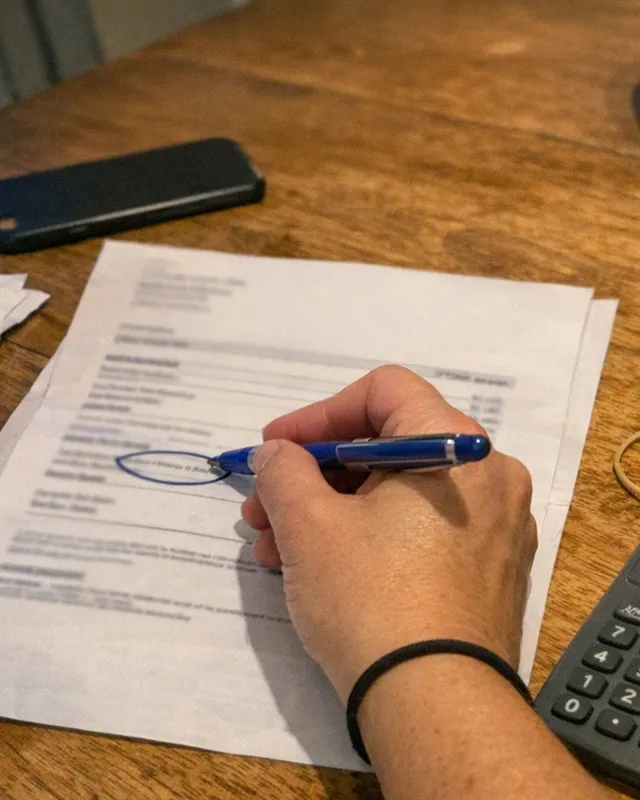
The bills are paid, the groceries are put away, and the checking account is close to zero. Payday is still days away, and the card statement on the counter is asking for more than you have.
Every money tip seems to start with “put your extra toward debt.” But there isn’t any extra. You’re doing everything you can to make it to Friday. If the numbers won’t stretch, that’s about the numbers, not your effort.
The answer isn’t squeezing harder. It’s a gentle order: protect the basics, make a few calls, find help you may qualify for, then give any small room one job. Each step is small enough to start before the next payday.
Step 1: Protect the Basics First, and Let That Count
When money is this tight, the first job isn’t paying off debt. It’s keeping your household steady.
That means a roof over your head, the lights and heat, food on the table and a way to get to work. Without those, nothing else in a plan can hold.
This can feel like falling further behind on purpose. It isn’t. Covering the basics first is what keeps a hard month from turning into a crisis.
Write those four things at the top of a sheet of paper, with what each one costs this month. Everything else goes below the line.
Then run a quick check for this week:
- Is rent or the mortgage covered?
- Are the lights, heat and water covered?
- Is there food for the week?
- Can you get to work?
If any answer is no, that’s where the first dollars go. Steps 3 and 5 can help with the rest.
Note: If a card payment can’t be made in full this month, try not to let it slide quietly. Step 3 covers the call to make first.
Steady comes before faster.
Step 2: Write Down Where Last Month’s Money Went
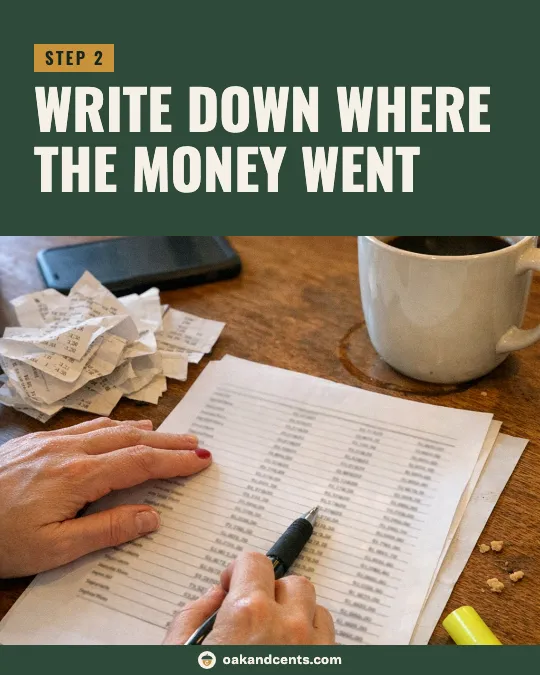
Before you cut anything, it helps to see the whole month on one page.
Open your bank app or last month’s statement and list every payment, big and small. The free expense tracker on this page has room for 25 lines.
You’re not looking for something to feel bad about. You’re looking for leaks: a subscription nobody uses, a bank fee, an app charge you forgot about.
Here’s an example with made up numbers. Say you find a $15 streaming service nobody watches, a $10 app subscription and a $20 late fee a calendar reminder could have prevented. That’s $45 a month back.
Next, list your bills by due date on the bill tracker. Sometimes the problem isn’t the total but the timing, when three bills land in the week before payday.
If that sounds familiar, budgeting by paycheck lines up each bill with the paycheck that pays it.
A clear page is calmer than a vague worry.
Step 3: Call Your Creditors Before a Payment Is Missed
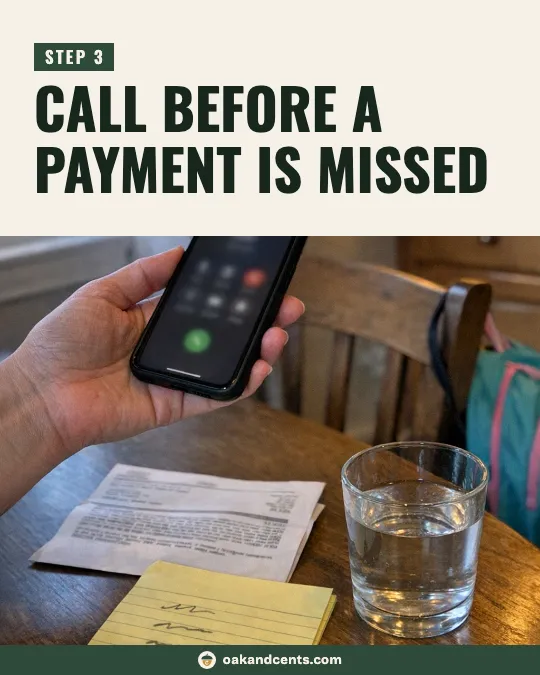
Picking up the phone to say you can’t pay might be the hardest step on this list. It’s also one of the most useful.
The Federal Trade Commission’s advice is to call the creditors you owe before a debt collector gets involved. Explain what’s going on and try to work out a payment plan with lower payments you can manage (FTC).
For credit cards, it also suggests asking for a lower interest rate.
You don’t need to pay a company to make this call for you. You can do it yourself, for free.
Say this: “I’m having a hard time making my payments right now, and I want to stay on track. Do you have a hardship program or a payment plan that could lower my monthly payment?”
They might say yes, offer something smaller or say no. Any of those answers tells you more than silence would.
Write down who you spoke with, the date and what you agreed to. The FTC also suggests asking for any agreement in writing.
If a debt is already with a collector, the FTC suggests talking to them at least once to learn more about it. Don’t share personal or financial details until you’re sure the caller is real.
If asking for a lower rate feels scary, this script for a lower interest rate walks you through it.
One phone call can change what next month looks like.
Step 4: Talk to a Nonprofit Credit Counselor
You don’t have to work this out alone at the kitchen table at midnight.
A nonprofit credit counselor looks at your income, bills and debts with you and helps you make a plan. The Consumer Financial Protection Bureau says working with one can be a way to get free or low cost advice.
A counselor may suggest a debt management plan. The CFPB explains that these plans typically lower your monthly payments and the interest and fees you’re charged. You make one payment to the agency, and it pays your creditors.
That doesn’t mean a plan fits everyone. The FTC notes that these plans can take 48 months or more and need regular, on time payments.
Before the call, have your list from Step 2 handy, plus each debt with what you owe, the interest rate and the minimum payment. The free debt list on this page has room for 12.
To find a counselor, start with the National Foundation for Credit Counseling, a network of nonprofit agencies. Before you sign anything, ask what each service costs and get it in writing.
If an agency won’t help you because you can’t afford its fees, the CFPB says to look elsewhere.
Asking for help is a plan, not a last resort.
Step 5: Lower One Bill and Check for Help You May Qualify For

When nothing is left at the end of the month, the quickest room usually comes from the bills, not from trying harder.
Pick one bill to look at this week: your phone plan, car insurance or internet. A short call to ask about a cheaper plan costs nothing, and these ways to lower monthly bills have more ideas.
Then check for programs built for exactly this kind of month:
- Groceries: SNAP helps with food costs. You apply in your own state, and the USDA explains how.
- Heating and cooling: the federal LIHEAP program helps households with energy bills.
- Everything else: calling 211 connects you with local help, including help paying bills.
Using help like this isn’t giving up. It’s using what’s there so your paycheck can stretch a little further.
Every dollar a program covers is a dollar your paycheck doesn’t have to.
Step 6: Give Any Small Room One Job

Once the basics are steady and a bill or two is lower, a little room may show up. It might be $20 a month. That counts.
Small amounts can feel too small to matter. They do the most when they all go to one place instead of being spread thin.
Here’s an example with made up numbers. Say you owe $600 on a card at 24% interest. Paying a flat $25 a month, it takes 34 months to pay off.
Add the $20 you found, so you pay $45 a month. Now it’s paid off in month 16, and you pay about $120 less in interest.
Pick your one debt with the debt snowball method, or try your own numbers in the credit card payoff calculator.
Later, if you have the energy, there are side hustle ideas and seasonal jobs to look at. They can wait.
Some months, the room will disappear again: a car repair, a sick kid, a short paycheck. That isn’t starting over. Return to Step 1 for that month, and pick the plan up again when you can.
Your plan in one line: the basics first, a call to each creditor, one talk with a counselor, one lower bill and one debt for any small room.
Small and steady still moves.
Watch Out for Quick Fixes That Cost More
When you’re worn out, an ad that promises to make your debt disappear can sound like relief.
Be careful. The FTC warns that debt settlement programs often encourage you to stop paying your creditors. That can add late fees and interest, hurt your credit and still leave you owing (FTC).
The same goes for anyone who promises to fix everything fast or wants money before doing anything. That’s a sign to walk away.
A slower plan you understand is safer than a fast one you don’t.
When You Need More Help Than a Budget Can Give
Sometimes no amount of budgeting closes the gap. If that’s where you are, it isn’t a personal failure. It means the next step is a conversation with someone who can see the full picture.
| Good fit | Think twice |
|---|---|
| You can cover the basics, just barely | Rent, mortgage or utilities are already behind |
| Your debts are with a few creditors | A debt has gone to collections or a lawsuit |
| One lower bill would make a real difference | Your income has dropped for the long term |
| You can make a few calls this week | Money worries are affecting your sleep or health |
If you’re behind on a mortgage, the FTC points to free, HUD approved housing counselors. If a debt has gone to collections or court, a nonprofit credit counselor or a legal aid office can explain your options.
Bankruptcy is one of those options for some people. The FTC describes it as generally a last option because of its long term effect on your credit, so talk it through with a qualified professional first.
The NFCC is a good first call for any of these.
Needing more help is a reason to call, not a reason to feel ashamed.
Write Four Lines and Make One Call
The card statement on the counter doesn’t need an answer tonight. You don’t have to solve the whole thing at once.
This week, write the four basics at the top of a page. Then make one call: to the company on that statement, or to a nonprofit credit counselor.
When you’re ready, list your debts in the free debt tracker, so every small step has a place to show up.
One call this week is a real start.