
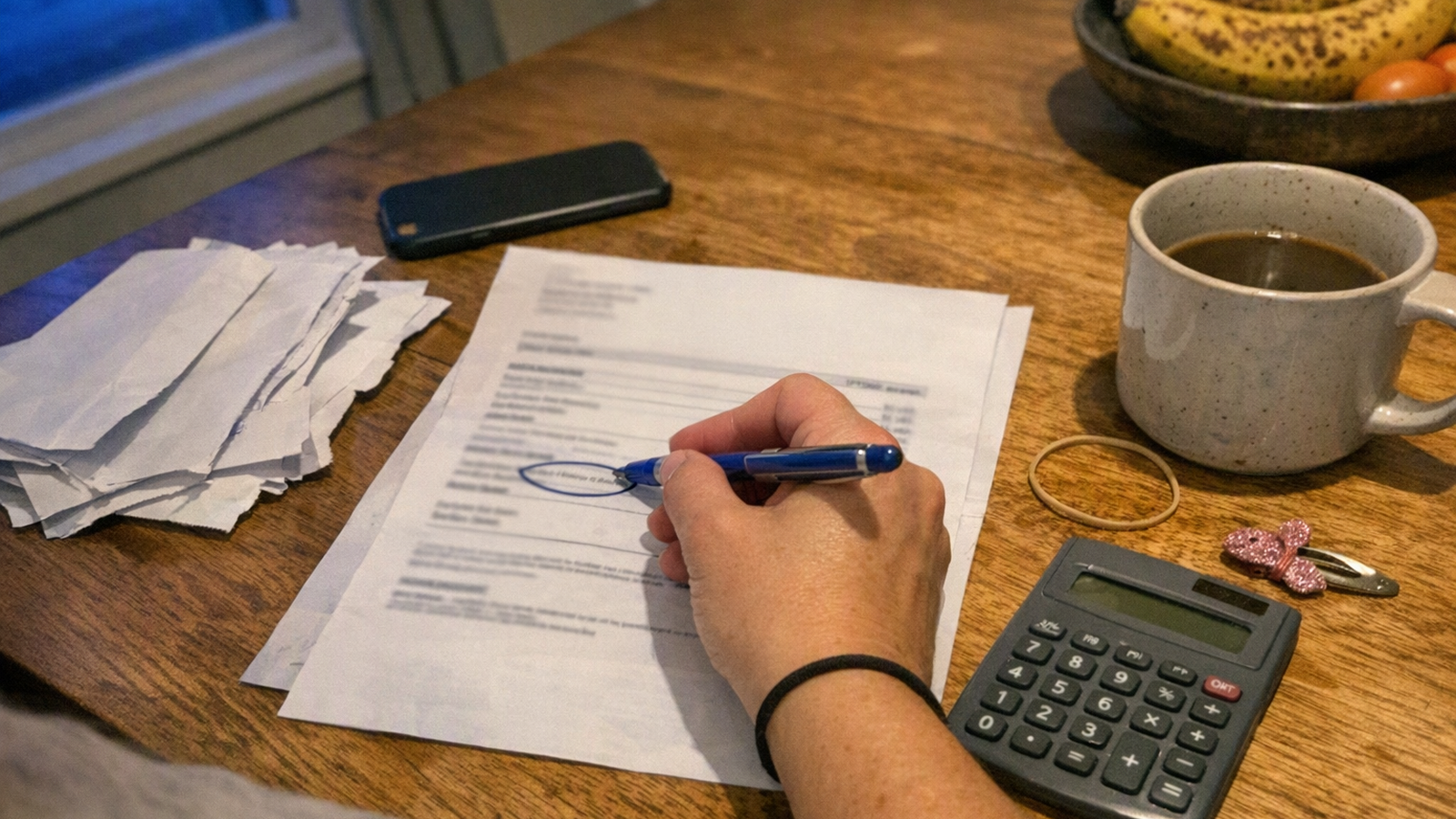
Trim $25 of forgotten subscriptions, $20 from the internet bill and $15 from the phone plan, and you’ve found $60 a month. In this made up example, that’s $720 a year that could go to your debt.
Still, monthly bills can feel like the one part of the budget you can’t touch. You want more for your debt, but the amounts feel fixed and calling a company feels awkward. That’s a very normal place to be.
Lowering your bills isn’t about giving up everything that makes life easier. It’s a few short calls, a few small settings and one rule for where the savings go. Here are 11 ways, starting with the easiest.
1. Cancel the Subscriptions You Forgot You Had

You spot a $9.99 charge on your statement and can’t place it. Then you remember: the free trial from last spring.
Subscriptions are easy to forget because they never ask. They just renew.
Scroll through the last two months of your bank and card statements. Circle every charge that repeats: streaming, apps, cloud storage, delivery memberships, the meal kit you paused but didn’t cancel.
That doesn’t mean cancelling all of them. Keep the one or two your family really uses and enjoys.
Cancel the rest one at a time, and note the date so you can watch for the last charge.
A subscription nobody uses isn’t a small bill. It’s money leaving quietly every month.
2. Ask Your Internet Company for a Cheaper Plan

Once the small charges are gone, the next place to look is the bigger bills that come every month like clockwork. Internet is a good first call.
It’s easy to end up paying for more speed than you use, and plans change over the years. Your old plan may not be the cheapest one anymore.
You don’t need to switch companies or argue. You only need to ask.
Say this: “Hi, I’m going through our budget and I’d like to lower our internet bill. What cheaper plans or offers do you have for my address?”
Sometimes there’s a lower plan or an offer they can add. Sometimes there isn’t, and that’s okay to hear.
If they say no, thank them, write the date on your calendar and ask again in six months.
One polite question can be worth more than an hour of clipping coupons.
3. Check Your Phone Plan Against What You Actually Use
The phone bill is the internet bill’s cousin. Plans pile on extras, and old plans tend to stay put long after life changes.
Open your phone account and look at how much data your family used over the last few months. If you’re paying for unlimited and using a little, a smaller plan or a prepaid plan may cost less.
Look for the extras, too: device insurance you forgot about, a line for an old tablet, a premium add on.
If money is tight, Lifeline may help. It’s an FCC program that gives a monthly discount on phone or internet service. Households with low income, or on programs like SNAP, Medicaid or SSI, can qualify (see the FCC’s Lifeline page).
The plan that fits how you live is usually the cheapest one.
4. Compare Car Insurance Quotes Once a Year
Car insurance renews quietly too, and the price can drift up without anyone calling to ask how you feel about it.
That’s not your fault. It’s just how renewals work.
Once a year, about a month before your renewal date, get two or three quotes for the same coverage. Then call your current company and ask what they can do.
Say this: “My policy renews next month, and I’m comparing quotes. Before I decide, can you check for any discounts I’m not getting?”
Be careful with one shortcut. Raising your deductible, the amount you pay before insurance pays, lowers the monthly price. Only do it if you have that amount saved.
The same coverage for less money is a real raise.
5. Look at What Your Bank Is Charging You
Fees are the bill nobody signed up for on purpose. A monthly account fee here, an overdraft fee there, and suddenly the bank is one of your bills.
Check your last statement for a monthly maintenance fee. Some accounts waive it if you set up direct deposit or keep a certain amount in the account. Ask what yours needs.
Then check your overdraft choice. A bank can’t charge you overdraft fees on ATM withdrawals unless you’ve opted in, and you can change that choice any time, the CFPB explains.
If your bank won’t drop a monthly fee, a credit union or a free checking account may be worth a look.
Money that goes to fees can’t go to your debt. Closing that leak counts.
6. Turn the Energy Bill Down a Little at a Time

With the account fees handled, the next bill is the one that changes with the seasons: electricity, gas or both.
You don’t need new windows or a fancy thermostat. Small habits add up, especially in the months the heat or air conditioning runs most.
Here are four to try this month:
- Set the thermostat a few degrees lower in winter, or higher in summer, while you sleep or are out.
- Wash clothes in cold water when the load allows it.
- Replace old bulbs with LED bulbs as they burn out, instead of all at once.
- Unplug chargers and small appliances you aren’t using, or put them on one power strip you can switch off.
None of these feel like much on a weeknight. Together, they can trim what you use.
Small habits you’ll keep do more than a big plan you’ll drop.
7. Ask the Utility About Budget Billing
Using less is one side of the energy bill. The other side is timing. A winter bill that jumps from $150 to $280, to use made up numbers, can throw off the whole month.
Budget billing is a plan some utilities offer that spreads your yearly usage across the months more evenly. You pay a similar amount each month, and the company adjusts it now and then.
Why it matters: Budget billing doesn’t lower your yearly total. It keeps the expensive months from landing on a credit card, which is where they often get much more expensive.
Call or check your utility’s website and ask if they offer it. While you’re there, ask about any help programs for households on a tight budget.
A bill you can predict is a bill you can plan around.
8. Move Due Dates So Bills Land After Payday
Predictable amounts are half of it. The other half is when the bills arrive.
If three big bills are due the week before payday, it can feel like you’re always short, even when the month adds up on paper. That’s a timing problem, not a you problem.
Some companies will move your due date if you ask. Lining bills up with your paychecks can help you avoid late fees, which are money spent on nothing.
Say this: “I get paid on the 15th. Could you move my due date to the 20th so the payment lines up with my paycheck?”
Make the change one bill at a time, and keep paying on the old date until the new one shows on your statement. If you budget by paycheck, this makes each payday much calmer.
Same bills, better timing, fewer fees.
9. Ask Your Card Company for a Lower Interest Rate
Once your due dates line up, the card payment is the next bill worth a call. The interest rate is part of what you pay every month, even if it doesn’t show up as its own line.
A lower rate means more of each payment goes to the amount you owe instead of interest.
Card companies don’t always say yes. But asking costs nothing, and a calm, short call is often all it takes to find out. Here’s how to ask for a lower credit card interest rate, with a full script.
To see what the interest is costing you now, try the credit card interest calculator.
A no today doesn’t stop you from asking again later.
10. Treat Groceries Like a Bill With a Set Amount
Groceries aren’t a bill in the usual sense. But they come every week, and they tend to grow when nobody is watching.
Giving them a set weekly amount, like a bill, keeps them from borrowing from the card payment.
That doesn’t mean cutting good food. It means a few habits: shop the pantry first, plan around what’s on sale, keep a couple of backup dinners for busy nights.
There are 15 of them in our guide on how to save money on groceries.
A grocery number you can see is easier to keep than one you only guess at.
11. Send Every Dollar You Free Up to One Debt
Here’s the part that turns all of this into debt payoff. Lower bills don’t pay anything off on their own.
It’s easy to think, “It’s only $15 a month, it won’t matter.” Then the $15 blends into everyday spending, and next month looks just like last month.
That doesn’t mean you did anything wrong. Money with no job tends to find one on its own.
So give it a job. Here’s a made up household that lowered three bills:
| Bill | Before | After | Freed up each month |
|---|---|---|---|
| Subscriptions | $40 | $15 | $25 |
| Internet | $75 | $55 | $20 |
| Phone | $60 | $45 | $15 |
| Total | $175 | $115 | $60 |
Now say they owe $2,000 on a card at 24% interest and pay $80 a month. At that pace, it takes 36 months and about $800 in interest to pay off.
Add the $60, for $140 a month, and it’s paid off in 17 months with about $380 in interest. That’s 19 months sooner and about $420 less, from bills they were already paying.
You can test your own numbers in the debt payoff calculator.
The easiest way to make it stick: on the day the lower bill posts, move the difference to your card. Or set up an automatic payment for the new, higher amount.
If you have more than one debt, pick the one you’re paying off first.
Every time a payment goes in, mark it on your free debt tracker. Seeing that line move is part of what keeps the plan going.
A smaller bill only helps if the difference goes somewhere on purpose.
When the Bills Are Already More Than You Can Pay
Sometimes the problem isn’t one bill that’s too high. It’s that there isn’t enough coming in for all of them. If that’s where you are, you haven’t failed at anything.
Call the companies first, before a payment is missed if you can. Ask about payment plans or hardship programs.
For heating and cooling costs, LIHEAP is a federally funded program that helps eligible households with home energy bills and can help prevent shutoffs, according to HHS.
If you’re juggling past due bills or collections, you don’t have to work out the order alone. The National Foundation for Credit Counseling can put you in touch with a nonprofit credit counselor who helps people do exactly that.
Asking for help is a money skill, too.
Make One Call This Week
The $60 from the example doesn’t have to turn up in one afternoon.
This week, pick one bill. Cancel one subscription tonight, or put one call on the calendar for your lunch break.
When the lower bill posts, move the difference to your debt the same day.
One bill, one call, one transfer. That’s how $60 a month starts.