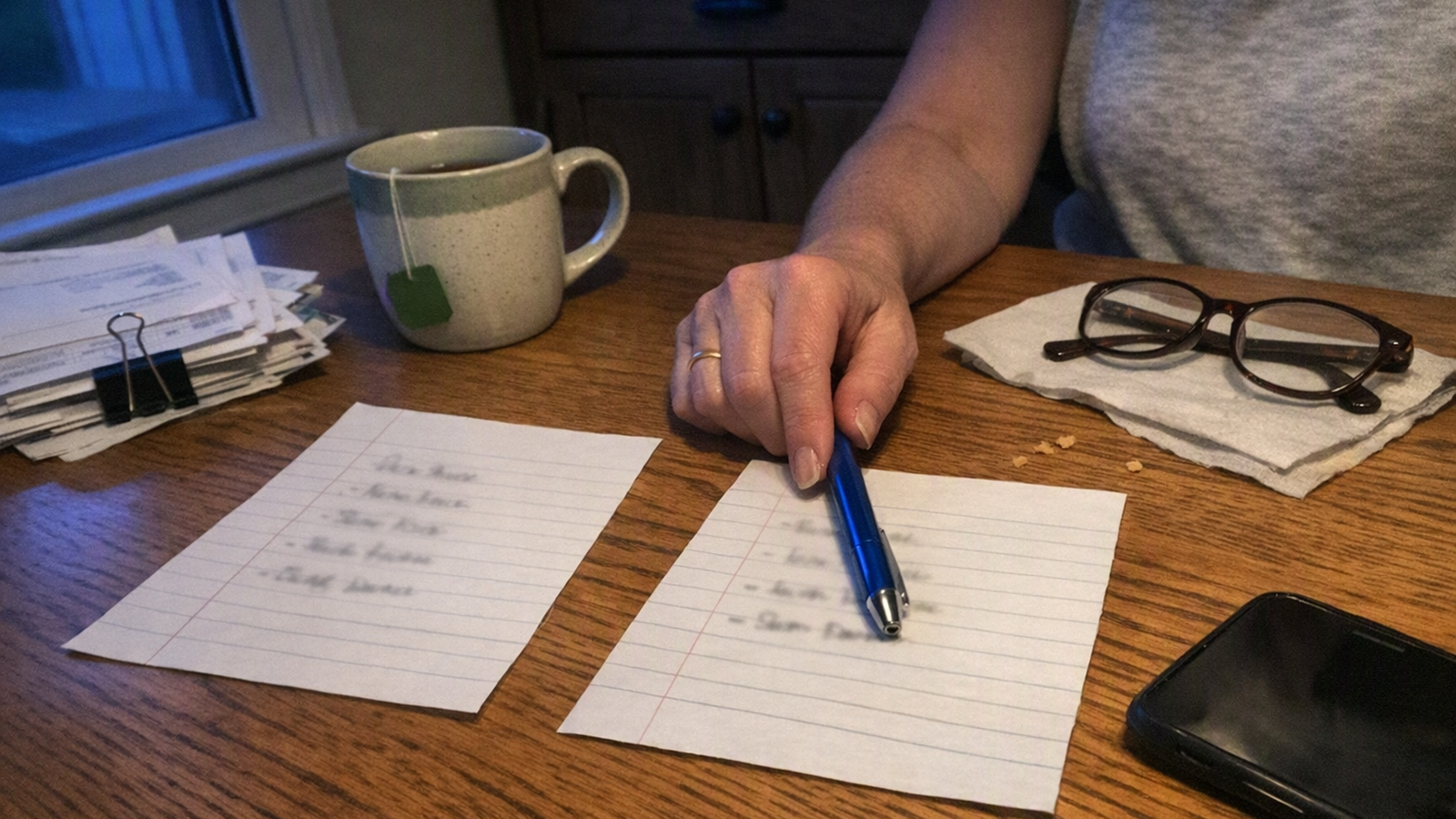
The extra $150 is sitting in checking, and five different debts seem to want it. You open one app, then another, and close them both.
One voice says pay the card with the scary interest rate. Another says knock out the little one so something finally moves. Picking wrong feels like wasting money. Being stuck only means you care.
The answer isn’t finding the one correct method. It’s seeing what each one costs and gives, with the same numbers side by side. With both laid out, you can pick one before that $150 leaves checking.
Both Methods Start From the Same Three Habits
Before the differences, here’s the good news: the snowball and the avalanche are much closer than they sound.
Both ask you to do three things every month. Pay the minimum on every debt. Send all your extra money to one target debt. When that debt is paid off, roll its payment onto the next one.
The only real difference is the order of the targets.
The debt snowball lines up your debts by the amount you owe, smallest first. The debt avalanche lines them up by interest rate, highest first.
The Consumer Financial Protection Bureau describes both: one targets the smallest debt for a quick payoff, the other targets the highest interest rate to save money over time (CFPB).
That doesn’t mean the choice is meaningless. It means you can’t really pick a bad one. Either order beats sending a little extra to every debt at once.
The rest is a trade between money and momentum, and you get to decide which one you need more.
The Snowball Pays the Smallest Debt First

Think of the store card you opened for a discount years ago. It’s small, it’s annoying, and it sends a bill every month anyway.
The snowball goes after debts like that one first.
Here’s a made up household with five debts and $150 extra each month. The smallest is a $640 store card. With its $35 minimum plus the $150 extra, it gets $185 a month and is gone by month 4.
Then that $185 rolls onto the next smallest, a $1,150 medical bill, which is paid off in month 8.
That early win matters more than it sounds. One less bill, one less due date, and real proof that the plan works.
The snowball ignores interest rates when it sets the order. In this example, the Visa has the highest rate, but it waits its turn behind two smaller debts.
The cost of that is a bit more interest over the whole plan. You’ll see exactly how much in a moment.
If you’d like the full five steps, the debt snowball method guide walks through them one at a time.
The snowball trades a little interest for a lot of momentum.
The Avalanche Pays the Highest Interest Rate First
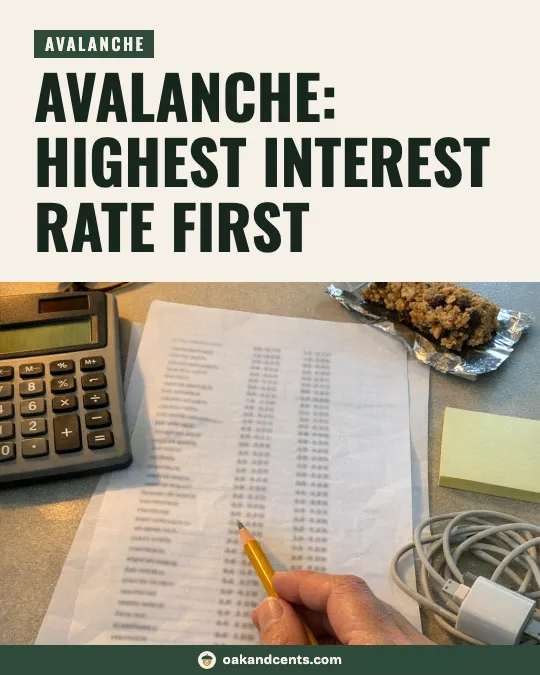
Every month, the lender adds interest to what you still owe, and next month’s interest is figured on that bigger number. The higher the rate, the faster that happens.
The avalanche goes after the most expensive debt first.
Your interest rate is often shown as APR, the yearly interest rate on the card. You’ll find it on your statement or in the card’s app.
In the same made up household, the Visa has the highest rate, about 27.5%. It gets its $85 minimum plus the $150 extra, so $235 a month, and it’s paid off in month 15.
Meanwhile, the small store card and the medical bill keep getting their minimums. They quietly finish on their own, in months 22 and 23.
Note: The avalanche can feel slow at the start. In this example, nothing is fully paid off for more than a year, even though the plan is working the whole time.
That long first stretch is the honest downside. The upside is that less of your money goes to interest.
The avalanche trades early wins for the lowest cost.
Same Five Debts, Two Different Orders
Here’s the whole made up example side by side, with the same $685 going out every month. Interest rates are rounded.
| Debt | Rate | Snowball: paid off in | Avalanche: paid off in |
|---|---|---|---|
| Store card, $640 | 18% | Month 4 | Month 22 |
| Medical bill, $1,150 | 0% | Month 8 | Month 23 |
| Visa, $2,900 | 27.5% | Month 18 | Month 15 |
| Mastercard, $4,750 | 22.9% | Month 28 | Month 28 |
| Car loan, $8,200 | 6.5% | Month 32 | Month 31 |
| Total interest | About $3,660 | About $3,360 |
So the avalanche saves about $300 and finishes one month sooner. Spread over the whole plan, that’s less than $10 a month.
The snowball’s first win comes in month 4. The avalanche’s comes in month 15, eleven months later.
By month 15, the avalanche owes about $190 less in total. The snowball, though, has already cleared two debts to the avalanche’s one.
The gap changes with your numbers. With only $50 extra a month, the avalanche saves about $200, but its first paid off debt doesn’t arrive until month 22. The snowball’s arrives in month 9.
The gap usually grows when one of your biggest debts also has the highest interest rate.
These five debts come filled in on both free templates: the debt snowball spreadsheet and the debt avalanche spreadsheet. Type in your own, and each one shows your month by month plan.
The difference is real. It’s also smaller than most people expect.
Finishing Matters More Than the Cheapest Order
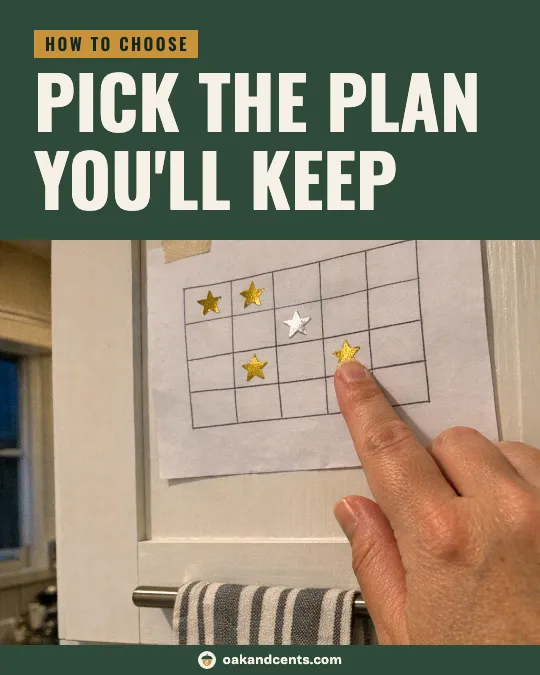
On paper, the avalanche wins. In a real kitchen, on a real Tuesday, the best plan is the one you’re still following in month 9.
A plan that costs $300 more but keeps you going is worth more than a cheaper one you quit. In this example, falling back to minimum payments only would cost far more than $300.
That doesn’t mean ignoring the math. It means being honest about what keeps you going.
Take three minutes with these questions:
- Do you need to see something finished soon? If motivation has been the hard part, lean toward the snowball.
- Is one of your biggest debts also the most expensive? If so, the avalanche may save you real money.
- Are your interest rates close together? Then the two cost about the same, and the snowball’s early wins are almost free.
- Have you started a plan before and stopped? The snowball’s quick win can help this time feel different.
There’s no wrong answer here, only a better fit.
If you’re torn, run your own debts through the debt payoff calculator. It shows your debt free date and total interest for both methods.
If the difference is small, take the snowball. If it’s large, the avalanche may be worth the wait.
The cheapest plan is the one you finish.
A Middle Path If You Can’t Decide
Maybe you like the math of the avalanche, but you also really want to see one bill disappear.
You can do both, as long as you do it on purpose.
One way is to start with the snowball for a single quick win. If a tiny debt can be gone in two or three months, clear it first.
Then switch the order to the highest interest rate and keep it there.
Another is to break ties with the other method. If two debts owe about the same, pay the higher rate first. If two rates are about the same, pay the smaller amount first.
What doesn’t work is switching every few weeks. Each switch resets the progress you were building on one debt.
Write your order down once. If you change it, change it once and write the new order down too.
A clear order you adjust once beats a flawless one you keep second guessing.
What Either Plan Needs to Keep Working

The method gets all the attention, but a few quiet habits do most of the work.
First, put every minimum on autopay. Missing minimum payments for several months can hurt your credit score (FTC).
Second, pause new purchases on the cards you’re paying down. When last month’s bill wasn’t paid in full, new purchases usually start costing interest from the day you buy (CFPB).
Third, keep a small cushion. A starter emergency fund means the next car repair doesn’t land back on a card.
Fourth, make progress visible. The free worksheet on this page lets you number your debts both ways, and the free debt tracker gives you one page to color in every payment.
One more thing helps either method: a lower interest rate. It’s worth one polite phone call.
Say this: “I’ve been a customer for a while and I’m working on paying this card down. Is there a lower interest rate you can offer me?”
There’s no promise they’ll say yes, but asking costs nothing. Our guide on asking for a lower credit card interest rate has more ways to say it.
The method picks the target. These habits keep you moving toward it.
Before Either Method, Make Sure the Minimums Fit
Both methods assume you can pay every minimum each month and still have a little extra.
If you can’t cover the minimums, a bill is past due or a debt has gone to collections, start there instead. Neither order matters yet.
Call your lenders and ask about a payment plan you can manage. You don’t need to pay a company to talk to your credit card company for you (FTC).
A nonprofit credit counselor can also help you rank the bills that can’t wait. Look for one through the National Foundation for Credit Counseling.
If money is very tight, getting out of debt with no money left over covers the steps that come before any method.
Steadying the ground first is part of the plan, not a detour from it.
Pick One Tonight and Let It Run
That $150 is still sitting in checking. It doesn’t need a flawless answer. It needs one target.
Tonight, list your debts once by amount and once by interest rate. If the same debt is on top of both lists, you’re done choosing.
If not, pick the snowball for early wins or the avalanche for lower cost. Circle your first target and send this month’s extra there.
Then give it three months before you judge it. Plans often feel slow at first and steadier after the first payoff.
Your money is going to work either way. Choosing is the hardest part.