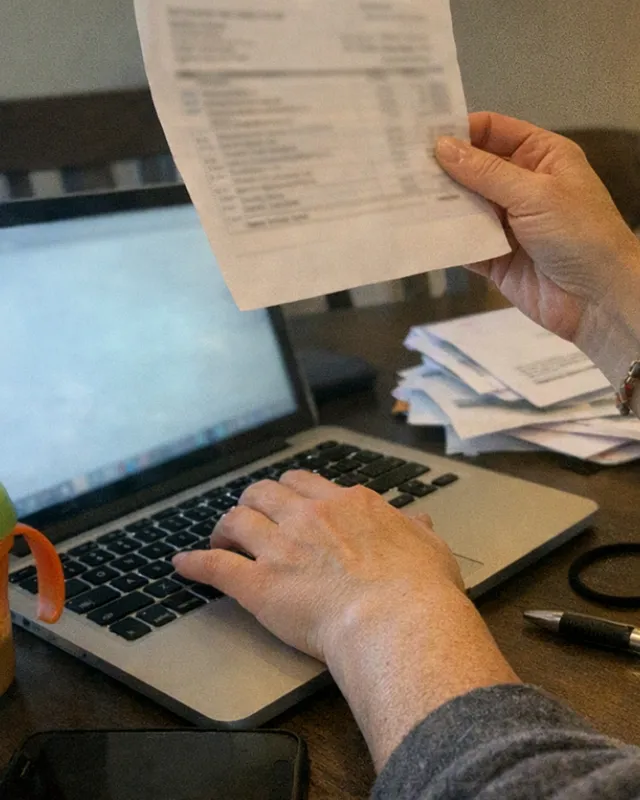

A $4,000 card at 22% interest, paid $150 every month, is gone in about 3 years. Pay only the minimum, and the same card can take about 17 years. Same card, same rate. Only the payment changed.
Those are made up numbers, but the pattern is real.
Looking at your own card can feel like two bad options. Avoid the math and hope, or face it and find a date that feels impossibly far away. Plenty of careful, hardworking people do a bit of both.
A credit card payoff timeline turns that fog into a month on the calendar. Here are the three numbers that set yours, a few gentle ways to pull it closer and a quick way to check your own date tonight.
Your Timeline Comes Down to Three Numbers

The statement lands on the counter, and the first thing you see is the big number at the top. It’s easy to stop there.
But that number is only one of three. Together, they decide your date:
- What you owe: the balance on your latest statement or card app.
- The interest rate: your APR, the yearly interest rate on the card. It’s printed on the statement.
- What you pay each month: the amount you can keep sending in a normal month.
That’s the whole recipe. You don’t need a finance class to work out a credit card payoff timeline.
There’s one quiet assumption under every timeline: nothing new goes on the card. New charges add to what you owe, so the date moves.
Your statement already has one timeline on it.
Card companies have to show how long it would take to pay off your current balance with only minimum payments. They also show what you’d need to pay each month to finish in 3 years (the CFPB explains that box).
Try this: Find that box on your latest statement tonight. Write down the two timelines it shows. They’re your starting points.
Three numbers, one date. Change any one of them and the date moves.
Why the First Months Feel So Slow
You pay $150, check the app a few days later, and the balance has dropped by much less. It can feel like the payment disappeared.
It didn’t. Part of it went to interest first.
Each month, the card adds interest on what you still owe. Then your payment comes off. Early on, what you owe is at its biggest, so the interest is too.
On the made up $4,000 card at 22%, about half of that first $150 goes to interest: roughly $73. Only about $77 comes off what you owe.
That doesn’t mean the payment isn’t working. It means the work speeds up later.
As what you owe shrinks, the interest shrinks with it. So the same $150 takes a bigger bite out of the card every month you keep going.
It’s also why paying only the minimum takes so long: on many cards, the minimum shrinks right along with what you owe. The credit card minimum payment trap walks through that slowly, with small ways to climb out.
If you’d like to see how much interest your card adds in a month, the free credit card interest calculator shows it with your own numbers.
Slow at the start isn’t the same as stuck.
See How Much the Monthly Payment Changes the Date
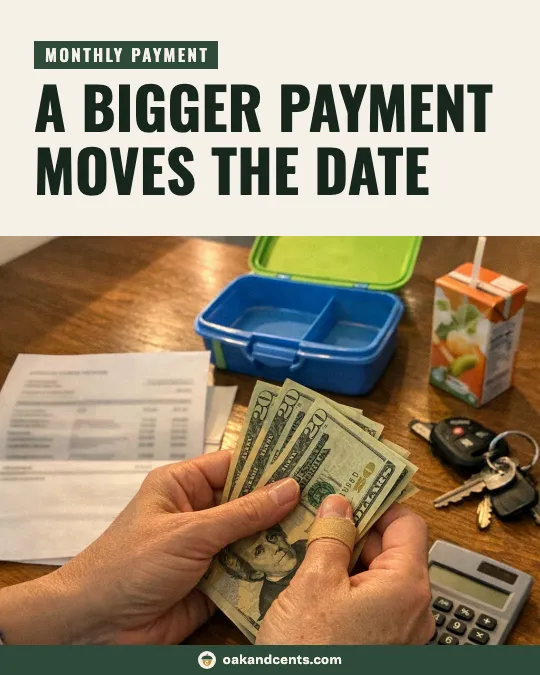
The monthly payment is the number you control most. Even a small change can move the date by months.
You don’t need a raise or a second job to see a difference. Here’s the same made up $4,000 card at 22%, with nothing new added.
At $100 a month, it takes about 6 years. At $150, about 3 years. At $200, a little over 2 years. At $300, a little under a year and a half.
Look at the jump from $150 to $200. That’s $50 more a month, and it brings the finish line almost a year closer, with about $500 less in interest along the way.
On minimum payments alone, the same card takes about 17 years. Your card’s real minimum may follow a different rule, so the box on your statement is the one to trust for yours.
That doesn’t mean you should reach for the biggest number you can find. A payment you can keep in a normal month will beat one you can only manage twice.
For the exact month and the exact interest at any payment, the free credit card payoff calculator does the counting for you.
A payment you can keep moves the date more than one you can’t.
Find Your Own Date in Two Minutes
Made up numbers only go so far. Your card has its own balance, rate and payment.
In the payoff calculator, you type in three things: what you owe, the interest rate and what you can pay each month.
It shows the month your card is paid off and roughly how much interest gets added along the way.
You can also start from the date you’d like. Switch it to “What to pay each month,” type a number of months, and it shows the payment that gets you there.
Here’s the made up $4,000 card at 22% once more:
| To be done in | Pay about |
|---|---|
| 3 years | $153 a month |
| 2 years | $208 a month |
| 1 year | $374 a month |
A rough number is fine to start. Nothing you type leaves your browser.
The calculator assumes your rate stays the same and nothing new goes on the card. Your statement may differ by a few dollars, because card companies figure interest a little differently.
Try a few payments and notice which date makes you feel calm instead of tight. That’s usually the one to start with.
A date you can see is easier to work toward than one you can only guess.
Move the Date Sooner With One Extra Payment
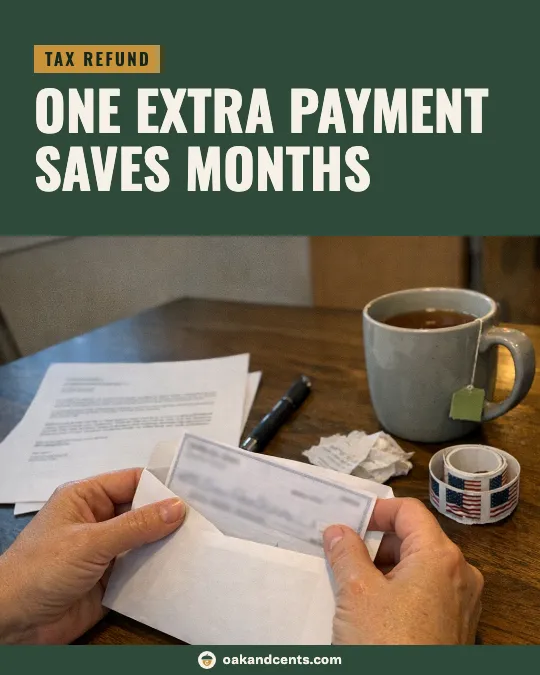
Some months bring a little extra: a tax refund, a work bonus, birthday money, a few extra shifts.
It’s tempting to let it blend into the month. A small part of it, sent to the card, can move your whole timeline.
That doesn’t mean every extra dollar has to go to debt. Keeping some for a cushion, or for something fun, is allowed.
Here’s the made up $4,000 card at 22% again, paid $150 a month. In month 3, a $500 tax refund goes to the card as one extra payment.
That one refund brings the finish line about 5 months closer, and about $390 less in interest gets added along the way.
An extra payment works this well because it lowers what you owe right away. Every month after that, interest is added on a smaller number.
The calculator has a spot for one extra payment and the month you’d make it. Try your next refund or bonus there before it lands, so you’ve already decided where it goes.
If you’re also wondering what a steady extra amount can do, paying $100 extra a month on debt shows three example timelines.
One planned windfall can do the work of months of payments.
Map Several Cards on One Timeline
When there’s more than one card, a second question shows up. Next to “how long” sits “which one first.”
Paying a little extra on every card spreads your effort thin. A plan picks one card for the extra money, then rolls that payment to the next card when the first is gone.
The two common orders are the snowball (smallest balance first) and the avalanche (highest interest rate first). Debt snowball vs avalanche compares them side by side.
If you’d like to see the whole timeline month by month, the free debt snowball spreadsheet lists up to 10 debts and shows your payoff month for each one. The debt avalanche spreadsheet does the same in the other order.
Both are Excel files that also open in Google Sheets. You type in the cream boxes and the rest fills in by itself.
Each one comes filled in with five made up debts, so you can see how it works before you add your own.
In that example, both orders finish in under 3 years. The avalanche finishes one month sooner, with about $300 less in interest.
Prefer a tool you don’t have to download? The free debt payoff calculator compares both orders with your own numbers.
Your plan in one line: know your three numbers, pick a payment you can keep, and send every extra dollar to one card at a time.
Several cards can still share one finish line.
Keep Your Timeline Honest as Life Happens
A timeline is a plan, not a promise. Life will nudge it.
A surprise car repair goes on the card. The rate goes up. A month comes when you can only send the minimum.
None of that means the plan failed. It means the date moved, and you can check it again.
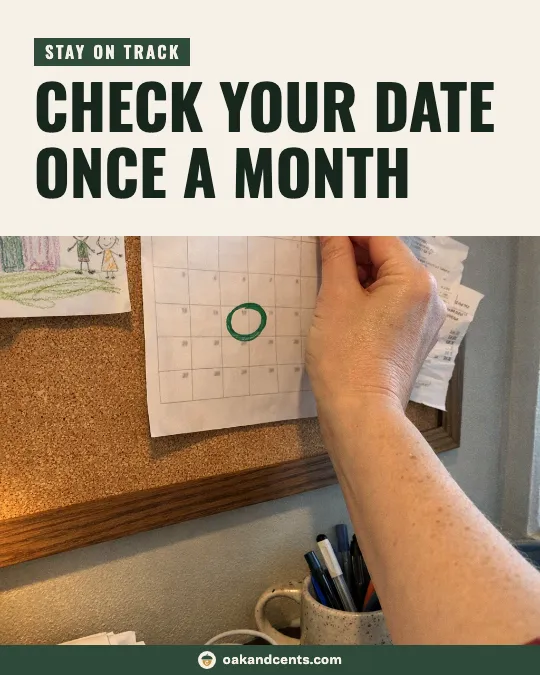
Once a month, look at your new balance and run the calculator again. It takes two minutes, and it keeps the date real.
If you’d like to track progress on paper or screen, the free debt payoff tracker spreadsheet shows how much of each debt you’ve paid off so far. Our debt payoff coloring chart does the same with acorns to color.
A lower interest rate can also pull the date closer. Some card companies will lower it if you ask, though there’s no guarantee.
Say this: “Hi, I’ve been paying down my card and I’d like to keep going. Is there any way to lower my interest rate?”
For the full call, see how to ask for a lower credit card interest rate.
A timeline you check once a month stays useful all year.
When the Timeline Looks Too Long
Some timelines come out at 10 years or more, even with your best monthly number. If that’s yours, you haven’t done anything wrong. The interest math is heavy at that size.
A payoff timeline fits well when you can pay more than the minimum, even a little, on at least one card.
Think twice about leaning on a timeline alone if your payment barely covers the interest, if a payment is past due or if a card has gone to collections. Rent, utilities and food come first.
A nonprofit credit counselor can look at the whole picture with you and talk through options. To find one, start with the member agencies of the National Foundation for Credit Counseling.
If you’re working with very little each month, getting out of debt with no money left over starts with smaller steps.
A long date is still a date. It can get shorter from here.
Find Your Payoff Month Tonight
Same card, same rate, and a date that moved by years: in the made up example, the payment made all the difference. Your own payment can do the same quiet work.
Tonight, pull up your latest statement or card app. Find what you owe, your interest rate and the box with the minimum payment timeline.
Then open the credit card payoff calculator and type in your three numbers.
Write the month it shows on a sticky note and put it where you’ll see it.
That’s your date. Now it’s something you can move.