Take a $2,000 paycheck, a made up one. Follow it down this page and watch every dollar get a job, until the last line reads $0.
Payday can bring relief and worry at the same time. The money is finally here, and part of you already knows it won’t stretch as far as you need. That squeeze usually comes from timing and bills, not from you.
A zero based budget isn’t about spending every dollar or tracking every penny. It’s giving each dollar one job before the week begins. You’ll see the full example, line by line, and a plan for your next paycheck.
What Zero Based Means (It Isn’t $0 in the Bank)
The name sounds scary, like you’re supposed to end every payday with nothing. That’s not it at all.
A zero based budget means every dollar gets a job, until $0 is left to assign. The money can still be sitting in your account. It just knows what it’s for.
Savings is a job. An extra card payment is a job. Next week’s groceries are a job. So is $35 of fun money.
That doesn’t mean you have to plan every coffee down to the cent. It means you decide on purpose, before the money starts moving.
Here’s why that helps. Money without a job tends to get spent on whatever comes up first. Money with a job is much easier to protect.
You can do this on paper, in an app or in a spreadsheet. The idea is the same: income minus every job equals $0.
Note: If you like a small cushion in checking for timing, give it a line too, like “checking buffer.” Now it has a job.
Zero is a plan, not an empty account.
Start With the Paycheck That Actually Lands
Before you plan anything, look at the number that really shows up in your account. That’s your pay after taxes and anything else your job takes out.
Plan with that number, not your yearly salary and not overtime you’re hoping for. If extra money comes, it gets a job when it arrives.
Next, look at the calendar between this payday and the next one. Which bills are due in that window?
In our example, you’re paid every other Friday. This paycheck lands a few days before the 1st, so it has to cover rent. The next paycheck won’t.
That’s why planning by paycheck can feel so much calmer. Each check only has to cover its own stretch of days.
If you’d like a simple way to sort bills into paydays, the guide to budgeting by paycheck walks through it.
Write the paycheck amount at the top of a page. Under it, list only the bills due before your next payday.
A plan built on real money is one you can actually keep.
Here’s the Whole $2,000 Paycheck, Planned to $0
Here’s the full example. Every amount is made up, just to show how the pieces fit together.
| Job | Example | What it covers |
|---|---|---|
| Rent | $1,100 | Due on the 1st, before the next payday |
| Bills that stay the same | $270 | Electric $110, water $40, phone $60, car insurance $60 |
| Groceries and gas | $330 | Two weeks of groceries ($250) and gas ($80) |
| Card minimum payment | $75 | Keeps the card current |
| Extra card payment | $100 | Goes straight to the amount you owe |
| Emergency fund | $50 | A small cushion for surprises |
| Kids and household | $40 | Soap, school things, a birthday gift |
| Fun money | $35 | Yours to spend, no explaining needed |
| Total | $2,000 | Left to assign: $0 |
Notice the order. Home, bills, food and getting to work come first. Then the minimum payment, so nothing slips.
Only after that do the “moving forward” jobs get their share: the extra card payment and the emergency fund.
Your numbers will look different, and that’s the point. If rent takes more of your check, the extra card payment might be $20 instead of $100. That still counts.
When you add your own lines, check the total twice. If it comes to more than your paycheck, trim a flexible line like groceries or fun money until it matches.
Every dollar has somewhere to be, and nothing is left wondering.
Give the Last Few Dollars a Job on Purpose
Once the bills are covered, there are usually a few dollars left floating. That’s the part most budgets lose track of.
In the example, the bills, food and minimum payment take $1,775. The other $225 is where you get to choose.
That doesn’t mean all of it has to go to debt. A plan with no room to breathe tends to break by the second week.
Here’s how the example split those last dollars:
- $100 extra to the card: it moves the amount you owe down faster.
- $50 to the emergency fund: so the next flat tire doesn’t go on the card.
- $40 for kids and household: the small costs that always show up.
- $35 of fun money: a coffee, a movie, something that’s just yours.
That adds up to $225, and the plan lands on $0.
If you’re paying down debt, the debt payoff calculator can show what a steady extra payment does over time. If your savings are at zero, a starter emergency fund is often a calm first goal.
Your plan in one line: the paycheck that lands, the bills due before next payday, then a job for every dollar left.
Fun money isn’t a leak in the plan. It’s what helps the plan last.
Let the Next Paycheck Look Different
Two weeks later, another paycheck arrives. Say it’s also $2,000, but this time rent isn’t due.
The same rule applies. Only the jobs change.
Without rent, about $1,100 is free for other bills and goals. This paycheck might cover the car payment, internet, two more weeks of groceries and gas, and a bigger extra card payment.
It’s also a good time for costs you know are coming, like car registration or Christmas. A little set aside now turns a big bill into a small one. That’s how a sinking fund works.
If you’re paid every two weeks, a couple of months each year bring a third paycheck. Decide its job before it arrives, so it doesn’t disappear into ordinary spending.
If your pay changes from week to week, plan on a lower amount you’ve actually earned. When a bigger check comes, give the extra a job on the day it lands.
Each paycheck gets its own plan, and each plan still ends at $0.
When Real Life Changes the Plan Midweek
It’s Wednesday, and a field trip envelope comes home in a backpack: $15, due Friday. It wasn’t on the plan.
This is often the moment a budget gets dropped. It doesn’t have to be. The plan just needs a small edit.
A zero based budget is meant to move. When something new shows up, you take money from one line and give it to another. The total still ends at $0.
In the example, the $15 could come out of fun money. Fun money drops from $35 to $20, and the field trip has a job.
That doesn’t mean budgeting isn’t for you. It means the budget did its job and showed you where the $15 could come from.
If you share money with a partner, a quick check in keeps those edits from feeling like a surprise.
Say this: “A $15 field trip came up this week. I moved it out of fun money so the rest of the plan stays the same. Does that work for you?”
A plan you can adjust is a plan you can keep.
Use the Free Template or One Sheet of Paper
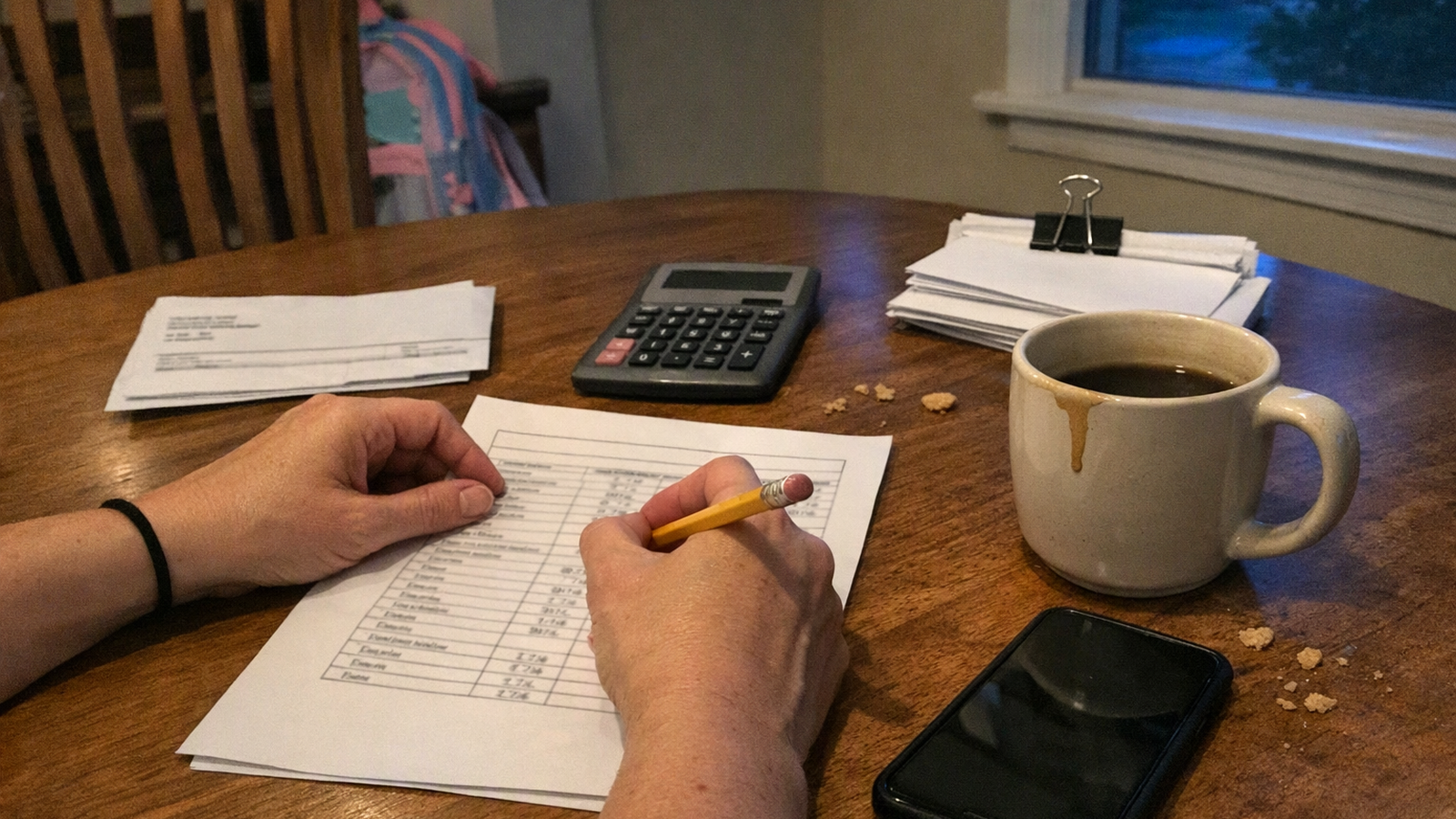
You don’t need special software to try this. A sheet of paper and a pencil will do.
If you’d like the math done for you, the free zero based budget template is an Excel file with the formulas already in it. You type in the cream boxes and everything else fills in by itself.
It plans up to four paychecks a month. Its “left to assign” number stays red until it reaches $0, so you can see at a glance when every dollar has a job.
The file opens on a short “How to use” tab, with example numbers you can replace.
It also opens in Google Sheets: upload it to Google Drive and open it with Google Sheets. No sign up and no macros.
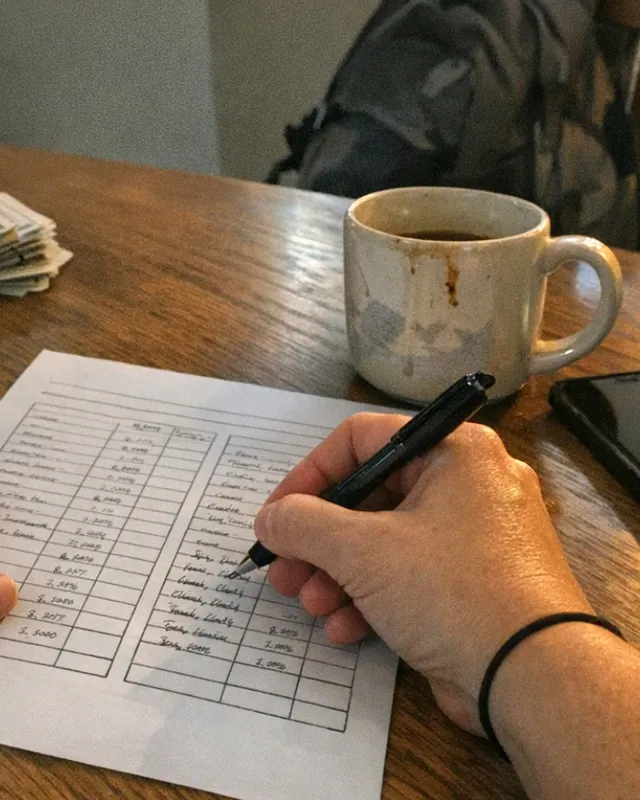
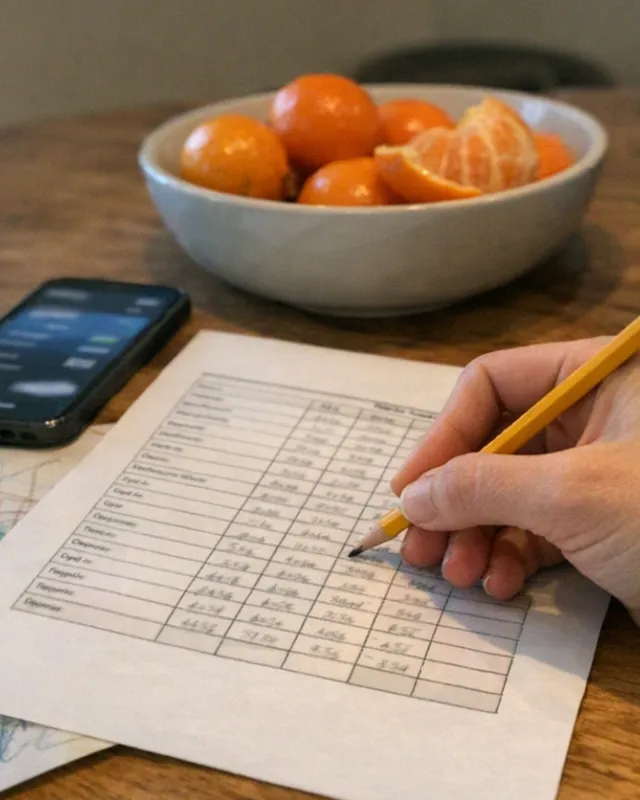
Prefer paper? The free Monthly Budget sheet on this page has planned and actual columns and a “Left to assign” line at the bottom. The full set of printable budget sheets adds a bill tracker, a debt list and more.
Whichever you choose, keep it somewhere you’ll see on payday.
The best tool is the one you’ll open again in two weeks.
If Your Pay Jumps Around or Can’t Cover the Basics
A zero based budget fits well when you have a regular paycheck and want to see exactly where each dollar goes. It’s also a good match when you’re paying down debt and want the extra payment protected.
Think twice if your pay is very unpredictable and planning every dollar feels stressful. A simpler split, like the 50/30/20 rule, may be easier to start with.
Think twice, too, if the paycheck truly can’t cover rent, food and minimum payments. A budget can show that gap, but it can’t close it alone.
In that case, talk with a nonprofit credit counselor about what gets paid first. The National Foundation for Credit Counseling is one way to get that conversation started.
Needing help with the plan doesn’t mean you did anything wrong. It means the numbers are tight right now.
Plan Your Next Paycheck Tonight
That $2,000 paycheck was only an example. Yours might be bigger or smaller, but the steps are the same.
Tonight, write your next paycheck amount at the top of a page. List the bills due before the following payday, then give every dollar left a job.
If the last line says $0, you’re done. If it doesn’t, move a little from one line to another until it does.
One paycheck, planned to $0, is enough for tonight.