$3,200 a month can feel like nothing by the 20th. In a made up example, that same paycheck covers rent, bills, groceries and every minimum, and still sends $200 a month to debt, once each dollar has a job.
When you’re in debt, a budget can sound like one more thing to get wrong, or a list of things you can’t have. But not knowing where the money goes is stressful too. Both worries are normal, and the heaviness comes from the debt, not from you.
Making a budget when you’re in debt isn’t about cutting everything. It’s five simple steps in order, so the bills are safe and the extra has a place to go. You’ll end with a one page budget for this month.
Step 1: Start With the Money That Actually Lands in Your Account
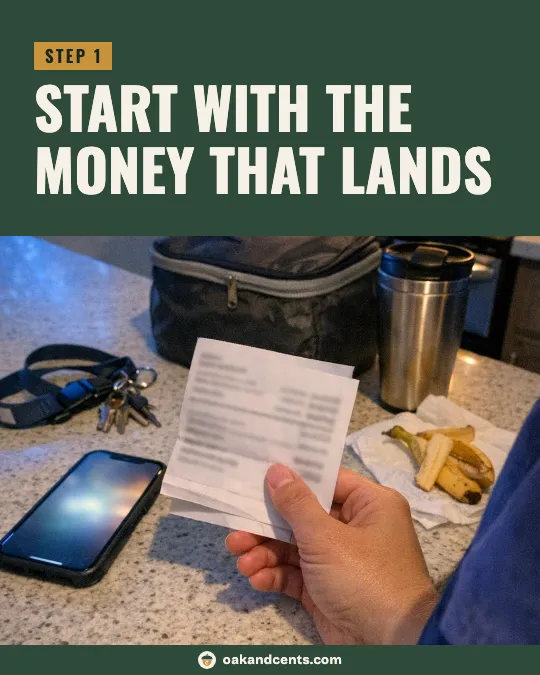
A budget starts with real money: what lands in your account, not the salary on paper.
Your paycheck arrives after taxes, insurance and retirement come out. Planning with the bigger number is how a budget runs short before the month is over.
That doesn’t mean you need exact numbers to the penny. Round down.
Look at your last two or three deposits. Write down each payday and the amount that arrived.
If you’re paid every other Friday, note which months bring a third paycheck. Most years have two of them, and they’re good months to catch up.
If your pay changes with tips, shifts or gig work, plan with your lowest month from the last few. Anything above that becomes extra.
If two of you bring money in, list both paychecks, even if you keep separate accounts.
Our made up household takes home $3,200 a month, from two paychecks of $1,600.
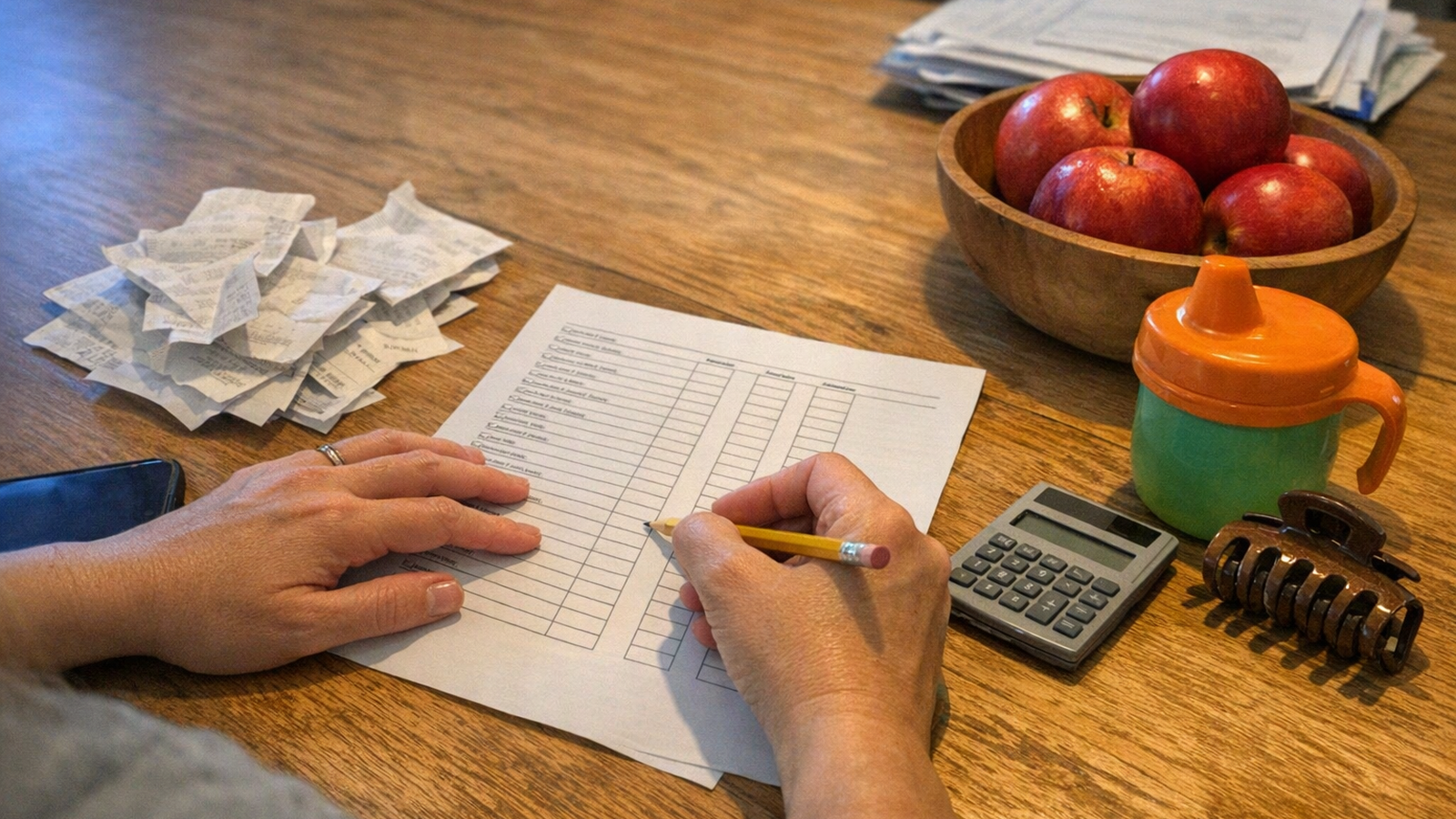
The free monthly budget page has lines for three paychecks, side income and other money, with planned and actual columns.
Plan with what you get, not what you earn.
Step 2: List the Bills That Stay the Same, Plus Every Minimum
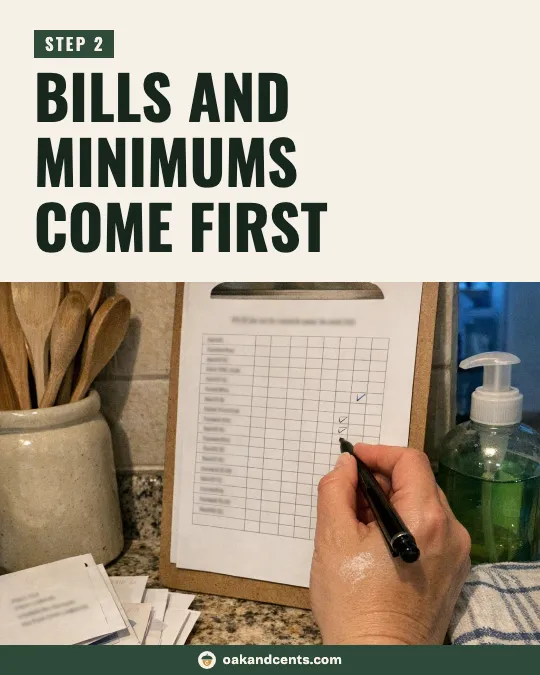
Next come the bills that show up every month, and the minimum payment on every debt.
Rent on the 1st, the phone bill on the 12th, the card minimum on the 18th. They’re easy to lose track of, because many of them leave on their own.
These go first because missing them usually costs the most, from late fees to shutoff notices.
That doesn’t mean they’re fixed forever. Some can be trimmed later. For now, just write them down.
In our made up example, the bills that stay the same are rent at $1,250 and utilities at $180. Then car insurance at $120, the phone at $70, internet at $60 and subscriptions at $25. That’s $1,705.
The minimum payment is the smallest amount a lender asks for each month. It’s on every statement, usually near the due date.
The minimums on a Visa, a store card and a student loan are $95, $40 and $120. That’s $255.
Some bills only come once or twice a year, like car registration. Divide them by 12 and add a monthly line, or set up a sinking fund so the full bill doesn’t land on a card.
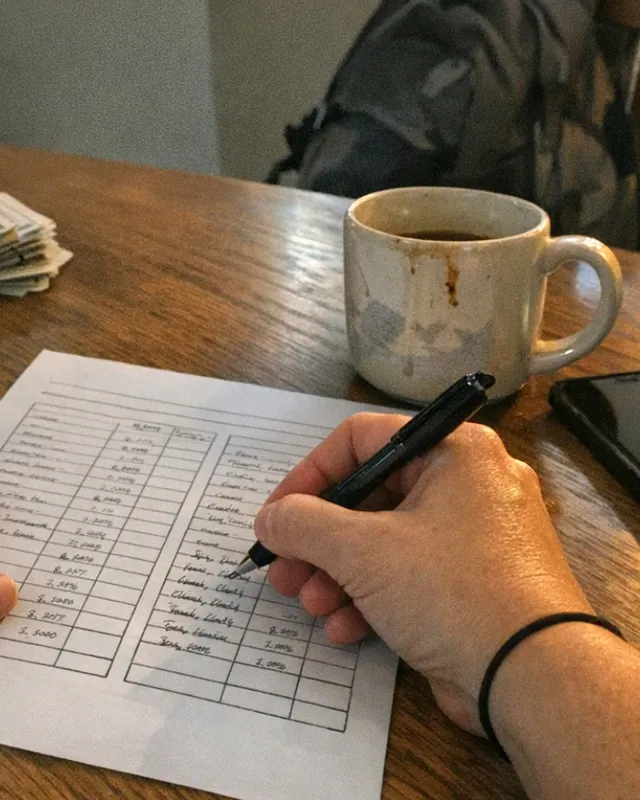
The free bill tracker has 22 rows and a paid box for every month, so you can see at a glance what’s still due.
If these bills already add up to more than you bring in, our guide on which debt to pay off first can help you sort them.
Safe bills first. Everything else gets easier from there.
Step 3: Give Spending That Changes a Number You Can Live With

Groceries, gas and everyday costs need a real number, not a hopeful one.
The grocery total jumps at checkout, the gas light comes on two days early, and a birthday party needs a gift.
Spending that changes each month is the easiest part to underplan. A budget that says groceries cost $300 when they cost $550 tends to break in week two.
That doesn’t mean feeding your family less than they need. It means starting from last month’s real numbers.
Open your bank app or your last statement. Add up one month of groceries, gas and everyday spending, then pick a number close to that. Go a little lower only if you spot an easy trim.
Our made up household plans $560 for groceries, $160 for gas, $90 for household and personal items, $80 for the kids and $50 for fun. That’s $940.
A weekly number can be easier to follow at the store. $560 a month for groceries is about $130 a week.
Why it matters: A small fun line keeps the budget livable. A budget with no room for anything nice is much harder to keep.
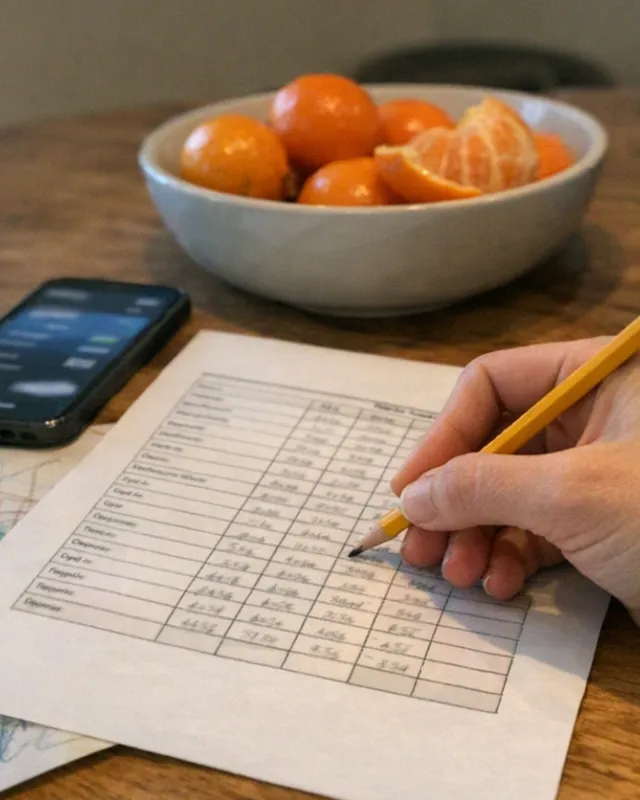
The free expense tracker has 25 rows to write down what you spend, with your spending budget minus total spent at the bottom. Our guide on how to save money on groceries has gentle ways to bring that line down.
An honest number you can keep beats a tight one you’ll break.
Step 4: Decide Your Extra Debt Payment Last, Not First
Your extra debt payment comes from what’s left, once everything above is covered.
It’s tempting to start with a big debt goal. But when the extra comes first, the groceries can end up on a card, and the debt grows anyway.
That doesn’t mean debt waits forever. It means the extra is real money, not a wish.
First, give a small amount to a cushion, so a surprise doesn’t land on a card. Then whatever is left goes to debt, on top of the minimums.
Here’s the whole made up budget on one page:
| Part of the budget | Example each month |
|---|---|
| Take home pay | $3,200 |
| Bills that stay the same | $1,705 |
| Minimum debt payments | $255 |
| Spending that changes | $940 |
| Small cushion | $100 |
| Extra to debt | $200 |
| Left to assign | $0 |
$1,705, $255, $940, $100 and $200 add up to $3,200. Every dollar has a job, and some people call this a zero based budget.
If nothing is left after the cushion, that’s okay for now. Your extra is $0 this month, and the minimums still keep every debt current. Look for one bill to trim, and try again next month.
Send the whole $200 to one debt at a time: the smallest one or the one with the highest interest rate. When it’s paid off, roll the payment to the next debt.
Our debt payoff plan shows how, and the debt payoff calculator can show your debt free month.
If you’d like a quick check on the overall split, the 50/30/20 calculator shows one common way to divide take home pay.
Your plan in one line: real pay in, bills and minimums first, honest everyday numbers, then a cushion and one extra debt payment.
Extra that’s planned last is extra that actually gets paid.
Step 5: Check In Every Payday and Adjust Without Starting Over
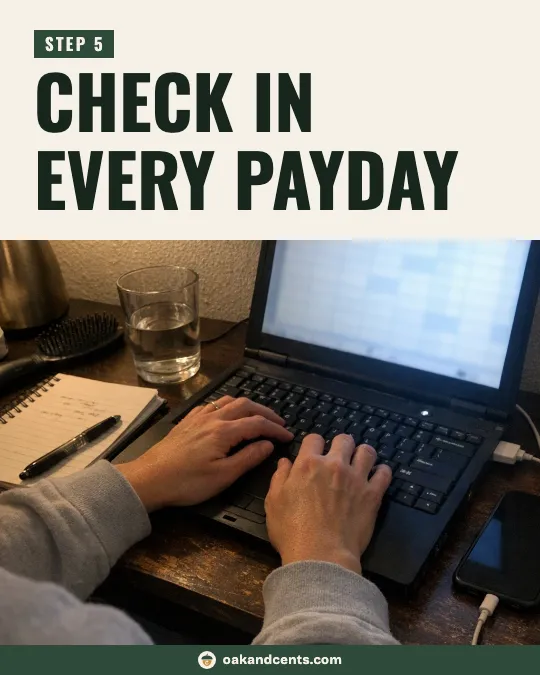
A budget is a plan for the month, not a test you pass or fail.
By the second week, something is usually off. A field trip, a bigger electric bill or a prescription you didn’t see coming.
Real months rarely match the plan exactly. That’s normal, and it’s why the check in matters more than the first draft.
That doesn’t mean tracking every coffee forever. A 10 minute look each payday is plenty.
On payday, look at three things: what’s left in each spending line, any bill due before the next payday, and if the extra debt payment can still go out.
If one line ran over, move money from another line instead of reaching for a card. Groceries ran $40 over? Take it from fun money this month.
If you share money with someone, keep it a team check in, not an audit.
Say this: “Can we sit down for 15 minutes on Sunday and look at the budget together? I’m not judging anything. I just want us both to know where we are.”
Anything that surprised you this month, like a school fee, gets its own line next month. That’s how the budget gets a little more accurate each time.
If you’d rather use a screen, the free monthly budget template shows planned and actual on every line, with a left to assign total.
If your bills cluster around one payday, our guide to budgeting by paycheck and the paycheck budget template can help.
Month two is usually easier than month one, and month three easier still.
Adjusting doesn’t mean the budget stopped working. It means it’s doing its job.
If Your Bills Are Bigger Than Your Paycheck Right Now
Sometimes the bills and minimums are more than the paycheck, even before groceries. If that’s your page, the budget did its job. It showed you the gap, and that is useful.
Keep housing, utilities and food first. Then call your lenders before a payment is missed. The FTC suggests reaching out early and asking about a payment plan you can manage (see the FTC’s advice on getting out of debt).
Our guides on ways to lower monthly bills and getting out of debt with no money left over can help close the gap.
You can also bring this page to a nonprofit credit counselor and go through it line by line. The National Foundation for Credit Counseling can help you find one.
A budget that shows a gap is still a good budget. It’s the first honest look.
Start This Month’s One Page Budget Tonight
Next month, the 20th can feel different, even with the same $3,200. Nothing about the paycheck changed in our example. Every dollar just got a job before the month started.
Tonight, write your take home pay at the top of a page. Tomorrow, list your bills and minimums underneath it.
The free printable budget sheets have all six pages ready, and the free debt tracker gives the extra payment a place to show up.
One page, five steps, and a month that feels a little calmer.